Tuesday, January 3, 2017

Lutheran Witness: Hope and Guidance

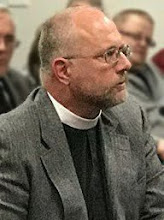
Pastor Lange recently published the following article in the January, 2017 Lutheran Witness


Until recently, Living Wills were rare. But now we are compelled to consider them with every visit to the doctor. Living Wills convey our wishes to care-givers when we no longer can. They can either designate durable power of attorney for someone to make our treatment decisions, or they specify treatment options, like “Do Not Resuscitate” (DNR), hospice, etc.

Does faith in a gracious God who creates, redeems, and sanctifies human life make our approach to these things different from the world's? Yes, as different as heaven and earth.

We believe that every day we breath is God's gift. “I believe that God has made me and all creatures; that He has given me my body and soul, eyes, ears, and all my members, my reason and all my senses and still takes care of them.” (SC).

The unbelieving world is afraid that medical miracles might keep their bodies alive long after their souls have become useless. But Christians have no such fear. We know that the miracle of life is for body and soul together. When you are in God's hands, there is never any danger that He might keep our bodies alive longer He Himself wants to. And we are always in God's hands.

"Whether we live or die, we are the Lord's” (Rm 14:8). We need not fear either living too long or dying too soon. The real danger is not what might happen to our bodies, but what is happening to our souls.

Jesus' human life began with his conception and continued right on through His burial. So also our own. At His crucifixion, He remained True Man, not vegetable. He was loved and served to the very end. Then, in faith until His dying breath, He commended His soul into God's hands.

Living wills can and should help the people whom God has given you, to love and serve you. For this reason, you may wish to grant a Durable Power of Attorney in order to ensure that they remain able to serve you. Guided by the Holy Spirit, through the Word of God, they can see to it that God's will is done.

We pray, "Thy will be done," while we have full use of our faculties. This remains our only wish especially when our capacity to confess it is gone.

Bullet Points:
1. Don’t be pressured. No one is required to have a living will. U.S. law prohibits health care providers from discriminating against those who do not.


2. Study: A SmallCatechism on Human Life by John Pless. This is an excellent scriptural resource.


3. Confess your fears to your pastor and christian family. They can help you quiet them by encouragement from the Word of God.

Friday, September 2, 2016

CrossTalk: The Same Yesterday, Today, and Forever

"Jesus Christ is the same yesterday, today, and forever. Do not be led away by diverse and strange teachings" (Hebrews 13:8-9). When I heard these words read last Sunday, they seemed to be tailor-made for the world we live in.
Our culture is characterized by constant change. Yesterday's new-fangled idea is already outdated and replaced by some other unheard-of madness. It's disorientating. It makes your head spin.
But this is nothing new. It has always been the way of the world to be as unstable as water. When you rely on the wisdom of the world, it will always turn on you. What seems safe today, is deadly tomorrow.
That's why one of the earliest Christian symbols is the anchor. The anchor, of course, is a heavy hook that reaches down through the unstable waters of the sea and connects a ship with the solid ground beneath. It gives stability to the ship in the midst of the inherent instability of the sea.
The neat thing is that, when Christians adopted the symbol of an anchor, they turned it upside down. Instead of drawing an anchor with the hook on the bottom, they drew it with its hook on the top! Why? Because our stability is not simply the floor of the sea, our stability is in the God who made the sea. "Our Father, who art in heaven."
Our Anchor is Christ, who is seated at the right hand of the Father. And when Christ is our Anchor, we are tethered to God Himself. In Christ, we have a stability which will never change, even though the earth give way and the mountains fall into the depth of the sea.
Christ, your Anchor, will never let you down because He remains the same. In fact, of all the things in this world, God is the only One who will never change. "For I, the LORD, do not change" (Malachi 3:6).
So take heart, you who trust in the Lord. Now is not the time to change with the whims of the world. Now is the time for confidence and steadfastness in the midst of wild and wooly seas. Yours is not a God who will change His mind and leave you adrift. Yours is a God who is so stable, that no matter what it may appear for the moment, in Christ, you are on the right side of history.
When the letter to the Hebrews says, "Jesus Christ is the same yesterday," it means that the goodness of God's created order is not subject to revision. It means that the love outlined in the Ten Commands cannot suddenly become hate.
When the same passage says that "Jesus Christ is the same today," it means that God who died to save you has not changed His mind. No matter what the appearances of the moment, even when it seems that God is against you, He is always at work to save you through repentance and forgiveness.
When it says, "Jesus Christ is the same forever," it means that your trust in Christ will never be disappointed. To trust in Christ and His Word is the one -- and the only -- certainty in this world.  When you stand upon His Word, you are standing on the right side of history.
So don't waver. Don't be intimidated. Christ, the Anchor, remains secure. Seek only to abide with Him, and He will abide with you.
“Swift to its close ebbs out life’s little day;
Earth’s joys grow dim, its glories pass away;
Change and decay in all around I see;
O Thou who changest not, abide with me.”

Saturday, August 6, 2016

Being the Remnant Church: Planting for the Promised Future

LCMS Mission and Witness blog

[The fourth and final in a series]
I will greatly rejoice in the Lord; my soul shall exult in my God, 
for he has clothed me with the garments of salvation; 
    he has covered me with the robe of righteousness, 
as a bridegroom decks himself like a priest with a beautiful headdress, 
    and as a bride adorns herself with her jewels. 
For as the earth brings forth its sprouts, 
    and as a garden causes what is sown in it to sprout up, 
so the Lord God will cause righteousness and praise 
    to sprout up before all the nations.  Isaiah 61:10-11
We are not yet the remnant church. But we are becoming the remnant church. We still enjoy having a substantial number of members, many vital congregations, and a residual level of respect in our culture. We aren’t the church we used to be in terms of numbers and influence. We’re also not the remnant church that we may soon become. We are the church in decline. We are heading toward our remnant status. We can and should fight against the trends that are driving us toward that status, but only if we can do so without compromising our confession of the Faith. And only if we are willing to embrace the underlying call of the remnant church.
In this series we’ve explored what it means to be the remnant church, God’s purpose in shaping us as a remnant church, and where He has placed us as His remnant church. In this final installment, we look at the foundational call of the remnant church. In this call we find clarity in God’s purpose for us, why we need to take our stand where He has placed us, and why He so adamantly forbids His remnant church from going to our own versions of Egypt. This call reminds us that, while we may be confounded by our present circumstances, hindered by our sinful attempts to re-create our glorious past, and troubled by our apparent future, the Lord is unbound by time and its limitations. He can see what we cannot. Our call as the remnant church is born of His unlimited vision of His church.
What is this all important call of the remnant church? This call — our call — is to sow for the promised future.
Sowing is repeatedly used in the Bible to describe the work of the church. It is an activity that is inherently based in hope and anticipation. It focuses us on doing work in the present that will bear fruit in the future. As difficult and demanding as sowing can be, no farmer who desires a harvest would ever consider skipping the hard work of sowing. Instead, he sows for the future. Like such a farmer, we are called to sow for the future. Unlike him, we sow for a promised future.
The promised future of the remnant church is not based on our desires and expectations, but is rooted in the Lord’s vision of what His church will be. It is a vision which we may never know or see. It’s fruition may come long after our time in this world has run its course. But it will come to pass according to God’s plan and purpose.
Because the future of the church is promised by God, it will come about whether we answer the call to sow for it or we leave that work for others to do. The Lord does not depend on us to keep His promises. Instead, He invites us to this work as our purpose and for our joy. Through it He turns our eyes from our circumstances as the church militant to a glorious vision of the church triumphant; from the church declining as the battle rages to the church reclining at the marriage feast of the Lamb. In that vision, in which an innumerable host assembled from every tribe and tongue and nation gathers in glorious celebration of the victory won by the Lamb and made ours by grace through faith, we see the promised ultimate future of the remnant church.
This is the future for which we sow.
We do not sow to regain a favored place in our culture. We do not sow to secure influence in our society. We do not sow to balance budgets or fill pews or for any other goal that will fade away when time is no more. In strength or weakness, when we have plenty or when we are in want, as a powerful church or as a remnant church, we sow only for this future with confidence that it will come to pass. It must. Because, whatever may happen to the church over time and however weak and small she may become in our world, this is the future promised by the Lord.
Questions to consider:
  • Am I willing to sow for a more vibrant future for the church which I may not see in my lifetime? Why/why not?
  • How does the continuing decline of the church affect my willingness to continue to be faithful in sowing?
  • What does it take for us to be faithful sowers as the declining church? As a remnant church?
  • How does the ultimate future of the church guide and inform me as a sower now?

Monday, July 25, 2016

Being the Remnant Church: Embrace God’s Purpose for the Remnant


We live in the world. It’s not our home, but it is where God has placed us and He has a purpose for our being here. Because we are in the world, our expectations and experiences here influence and shape how we view ourselves as the Remnant Church. When we allow worldly thinking to fashion our understanding of ourselves, we’re likely to see being a remnant of what was once large, influential, and celebrated in our culture as evidence of God’s disfavor with us. The world can’t help but to see a declining church in this way and we get caught up in this perspective.

Martin Luther spoke of this way of seeing the shrinking church when he wrote,

·                     You see that the church is forever about to fall, and therefore there must always be consolations. Although there would scarcely be a remnant, God is the protector of this poor little church. Paul especially used this argument against the Jews, calling himself (Phil. 3:5) “of the people of Israel, of the tribe of Benjamin.” Paul made use of such and similar boasts to strengthen his church, even though it was always the most wretched in appearance … So it was with the primitive church. It was a handful of people, a fistful of dough, hardly one little biscuit in a whole bakery. This smallness of the church is the supreme offense in the world. (Luther’s Works, volume 17, page 84).

When we lose the proper perspective of the church as “always the most wretched in appearance” according to the standards of our world, we’re also likely to lose sight of our purpose. Instead of pursuing what makes the church in all of her smallness “the supreme offense in the world,” we suppose that the church should be admired and respected by the world. When we do, we are likely to be missing — or possibly even ignoring — God’s purpose for the Remnant Church.

What is God’s purpose for the Remnant Church? It is the same as it is for the church in every age and in all circumstances. No matter how large or small, admired or disdained, wealthy or poor, etc. the church may be, the purpose for us while we are in the world is to bear witness of Christ so that others may come to faith as we have come to faith. Luther’s commentary on 1 Peter 2:9 states it well and plainly, “We live on earth only so that we should be a help to other people …For this reason, however, He lets us live that we may bring other people also to faith as He has done for us” (emphasis added).

We might think that we would be more effective in carrying out this one reason for our being in the world as a church that is large in numbers, rich in resources, and influential in our society. In our way of thinking, a strong and powerful church is far better suited for engaging our world with the Gospel, especially when people are hostile toward the church. Why does this work fall to us while our numbers are decreasing, our resources are dwindling, and our culture increasingly despises us? What is God’s purpose in shaping us as the Remnant Church?

Perhaps the best way to explore God’s purpose for us being the Remnant Church is to revisit Gideon and the Israelites as they went up against the Midianites (Judges 7). As they mustered to confront their powerful enemy, the Lord told Gideon, “The people with you are too many for me to give the Midianites into their hand, lest Israel boast over me, saying, ‘My own hand has saved me.'” By reducing Gideon’s army from 32,000 to 300, God made it clear to His people that He was their deliverer and that He had won the victory for them. Their call was to destroy those opposed to the Lord. Our call is to engage those opposed to Christ in love and compassion. Two very different callings, but we share the same purpose in being made small. Should it come to pass that we would see the Church grow in numbers, resources, and status, we will know better than to say that we have made it happen by our own methods, wisdom, or strength.

The purpose of the Remnant Church is to bear witness of Jesus in our world so that others would come to faith just as we have. God’s purpose in doing this through a remnant is that we would give Him the honor, praise, and glory that is due Him. Whatever we may think of God’s reasons and His ways, our call as the Remnant Church is to embrace God’s purpose for us.

[Next in the series: Take Your Stand in the Land]

Questions to consider:

    How have I tried to engage the people of our culture who are hostile toward the church with Christ’s love and compassion? What new ways might I try to do this?
    In what ways have I let the “smallness of the church” affect my attitude about the work to which God has called us?
    How many more people, how much more money, and how much better status does the church need to have before I can be faithful in being a witness of Jesus in my everyday life? What does this reality call me to do?
    What’s my reaction to Luther’s statement that the only reason God leaves His people on earth is so that other people can come to faith in Jesus? For what other reasons am I living? How do these other reasons impact my commitment to the only reason?

Tuesday, July 12, 2016

CrossTalk: The Power to Restore

As I write this morning, reports are coming out of Dallas about snipers, IEDs, personal bombs, and de-arming robots. It sounds more like a war than America! What is happening to respect for authority? Who has stolen our respect for human life?

Add to these the incessant attacks on Christians in California, Iowa, Oregon, and even in our own state. We are reeling and asking what happened to mutual respect and decency? What is happening to chastity and marriage? Who, or what, is attacking the homes of our land and destroying our families?

What shall we say to all this? Today let me give you two words: encouragement and faithfulness.

First, a word of encouragement. "If God be for us, who can be against us? He who did not spare his own Son but gave him up for us all, how will he not also with him graciously give us all things?" (Romans 8:31-32) The sufferings and death of Jesus Christ stands as your certain guarantee of God's care for you.

If you already believe in Christ Jesus, you are receiving His forgiveness through Word and Sacrament. What is left to be afraid of? Be reassured that God the Father, who gave His only-begotten Son for will never stop giving. Fear not. God has your back.

If you despise the God of the Bible and cheer the new and hostile tone against Christianity, He doesn't hate you back. God gave His only-begotten Son for you; and He did not come "into the world to condemn the world, but that the world might be saved through Him" (John 3:17). You, too, are invited to change your mind and receive His forgiveness and goodness.

Second, a call to faithful living. There is a very good reason that Satan is attacking marriage, life, and respect for authority. It is because these are the greatest threat to his power. These are no mere human institutions, they are God's own institutions.

Because they are holy, because they are markers of God's continued grace in this world of sin that Satan attacks them. Today, more than ever, the people of God should understand that the simple act of cherishing a child or remaining chaste, is a meaningful act of spiritual warfare for the whole world.

So be bold, people of God! Confess with your very lives that human life is a sacred and holy thing. Confess with your sexuality that marriage is a gift that God gave as an icon of Christ and the Church. Confess with your home life that the human family is a very participation in the life of heaven. See Marriage, Life and Family as an image of the Triune God who created you.

In so doing, let Christ's word of forgiveness, life and salvation overpower the hate, despair, perversion, and hopelessness of our society. Where you have opportunity to strengthen your marriage, to affirm human life, or to hold together your family, take it. Where you have temptation to give in to the world and undermine these precious gifts, hold out.

And when you have fallen and failed in your own marriage, life, or family, humbly repent and eagerly receive the forgiveness of Christ. Forgiveness and restoration is the entire reason that Jesus has come. That is how He has always restored this fallen world. And that is how He will renew and restore your own world as well.

Monday, July 11, 2016

Making Peace with Vocations We Don't Have

...today’s children tend to be hounded by the notion that they must find their passion, follow their heart, achieve their dreams--do, be, and feel special, sparkly, valuable, and happy. This is tough on kids who don’t have a clear “passion” to chase. It’s rough on those whose hopes elude them.  

In Lutheran circles, we point to the doctrine of vocation as a counter-balance to the pressure to focus on ourselves. Even so, it can be easy to wonder if our vocations are enough. Stay-at-home moms worry that they ought to accomplish more outside the home. Single women fear that without husbands and children, they are cut off from life’s deepest and most meaningful work. 

We need to become more comfortable with the idea that life is about receiving different gifts, different paths, and different opportunities. Despite our lip service to diversity, our culture resists accepting the real differences between individuals, cultures, and even human bodies.