Thursday, August 17, 2017
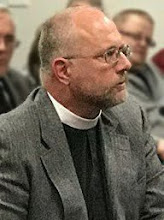
Judge Ruth Neely Appeals to the Supreme Court


Saturday, July 22, 2017
Peer Pressure and Faith in College:
Six Tips to Immerse Yourself in Campus Church Life
As a Christian and a student at a liberal, secular university, I can say that the peer pressure to conform to non-Christian beliefs and values is staggering. The general atmosphere that surrounds many colleges and universities in the US is the belief that a student, no matter their background, should attend college with an open mind to new ideas. This seems great; on the outside, an open mind is presented as a belief that could only lead to an improved lifestyle. However, this belief leads some Christians to innocently question why they believe what they do, and then to a stronger, more assertive reason not to believe the same thing they did when they first came to college.

It begins as soon as you get to the dorms. Making friends can be difficult. You’re at a new school, and you might not know anyone there. Unfortunately, it is especially difficult when the majority of students seem to be participating in activities that you were told were wrong: underage drinking, drugs, and sexual activity—right in the room, down the hall, or on the floor where you live. They also invite you to participate, and no one is there to tell you it’s wrong anymore. What’s the harm? More than the fact that two-thirds of the activities mentioned above are illegal, (and that they also go against God’s law), it can affect your school performance. You’re at school to learn, and partying the nights away with friends can lead to extremely unproductive semesters. I’ve known people who have had to drop out of school because of this.
Beside the new friends you make, there’s the ever-present idea that what your parents believed was old fashioned, counterintuitive, and hateful. Being a Christian often means disagreeing with the common views on campus, such as social or political views, or controversial topics such as same-sex marriage and abortion. Speaking against those topics can lead to many heated arguments—and the loss of “friends.” It seems as if open discussion is only encouraged when you agree with the socially acceptable viewpoints.The important thing to remember is that disagreements are never going to be easy, and you’re not going to please everyone.
1 Peter 2:9 says, “You are a chosen race, a royal priesthood, a holy nation, a people for His own possession, that you may proclaim the excellencies of Him who called you out of darkness into His marvelous light.” God calls us to proclaim his Word! Just because you’ve now moved away from home and no one is there to push you to attend church doesn’t mean your own self-discipline should slip. Believe me, it’s just as easy to skip class as it is to skip out on church on Sunday mornings. Many campuses, or the surrounding cities or towns, will have a Lutheran church that you should be able to join. In fact, look for a church home at www.lcms.org/LCMSU. Here are six tips you can try to immerse yourself in the campus church life:
- Go to Bible studies during the week.
- Attend mid-week events, such as social activities with other students.
- Complete service activities with your church group at the local food banks or shelters.
- Take a weekend to go to a conference or listen to a speaker to strengthen your faith.
- Volunteer your time at the campus church center—help with whatever tasks that may need to be done!
- Join a leadership group or committee to help with service projects, funding, and outreach.
Leaving the faith isn’t an instant change. It starts gradually; it may start with your new friends’ snide remarks and activities. Perhaps, as you go to class, you may notice that some of the professors you look up to don’t agree with Christianity, and you may wonder if you’ve been wrong this whole time. You might decide to skip church one week because of a big test on Monday, and then at the end of the semester you look back having never entered the sanctuary.Leaving the faith isn’t an instant change. It starts gradually...
Don’t let peer pressure or the effects of college affect your faith. If you find that you’re struggling to maintain a consistent Christian mindset, call your parents or your pastor back home. Join a Lutheran campus ministry and become involved. I know it can be difficult, but keep up the faith in college. Don’t let the devil tempt you with short-term results and dead-end promises. Remember also that you are a child of God, and that you will always find forgiveness in Christ. Stand up for what you believe in. Let Jesus be your light, and seek Him in all that you do.
Reposted from The CPH Blog: The Word Endures
Tuesday, June 20, 2017
CrossTalk: The Eternal Trinity Means Eternal Love

This Great Commission is one of the most familiar passages in the Bible. It also contains what is certainly the most quoted phrase in all of Christendom.
For nearly 2000 years almost every Christian worship service, ceremony, prayer, or devotion has begun with the invocation, “In the name of the Father, and of the Son, and of the Holy Spirit.” This is true of Eastern Orthodox, Roman Catholic, Coptic, Lutheran, Presbyterian, Episcopal, Methodist and dozens of other denominations and traditions.
Even those denominations that do not use the phrase on a daily basis, still use it at every baptism. The name of the triune God is the most wide-spread and enduring of any Christian phrase or formula, bar none.
This is even more remarkable when you notice that Matthew 28:19 is the only place in the entire Bible where it is found. While there are plenty of other phrases which our repeated throughout the Bible, this phrase is only found once! So why has it become so universally used?
Answer: It is the perfect summary of the Christian faith. God Himself commands us to speak it upon every person who wishes to be a Christian. It is the final revelation of the name of God. It is more than just a metaphor about God. It is more than a handy nick-name for God. It is God’s name: the full and perfect statement of who God is.
God is Father. God is not merely “like a father.” He is the only Father. As Jesus says, “Call no man your father on earth, for you have one Father, who is in heaven” Matthew 23:9. For this reason Jesus refers to Him everywhere are “the Father.”
Unlike human fathers, He didn’t just become a father at some point in time. It’s not like a solitary, nameless god sat around for an eternity before He decided to have a son. Otherwise He wouldn’t “be” Father. He would only “have become” a father.
When an early heretic (Arius) started teaching that “there was a time when the Son was not,” all Christians knew instinctively that he was denying the very nature of God. The eternal fatherhood of God lies at the very heart of the Christian faith. Which also means that the eternal Son of God lies at the very heart of the Christian faith.
If there ever was a time when the Son did not exist, that would mean that there was a time when God was not Father. And if there ever was a time when God was not Father, there was a time when God was not loving the Son and that the Son was not loving the Father.
But “God is love,” 1 John 4:8! It is impossible to think of God not loving. A “god” who is not pouring all that He is and all that He has into someone other than Himself is no god at all. So, His only-begotten Son, is eternally receiving all that He is and all that He has from the Father. And if He is receiving all that the Father is, then the Son, too, is “God of God, Light of Light, very God of very God.” (Nicene Creed).
This is love. It is total self-giving. It is total receptivity. Love is not partial, nor self-centered, nor self-sufficient. This is both what God wants to do for you, and how God wants you to be toward all others. He wants to pour into you all that He is and all that He has; By this infinite gift, you are freed to pour out all that you are and all that you have not only for friends, but also for those who hate and persecute you.
So, the name of the Father, and of the Son, and of the Holy Spirit is not only the full and complete revelation of who God is, it also the full and complete revelation of what love is. Who could ask for more?
Monday, June 19, 2017
Faith 'n' Family, KFUO radio interview

and interview of Rev. Jonathan Lange by Andy Bates
Wednesday, May 24, 2017

Tuesday, April 25, 2017
CrossTalk: St. Mark, the Evangelist

According to Eusebius’ church history (310 AD) Mark arrived in Rome with the Apostle Peter around 42 AD. As he worked with Peter over the following year, he wrote down Peter’s account of Jesus’ ministry before leaving for Alexandria, Egypt. So, he not only left a copy of the Gospel in Rome, he also brought one with him to Egypt.
In Alexandria, Mark established the earliest Christian Church on the African continent. This Church became one of the five centers of Christianity in the ancient world. Mark, himself, was its head pastor (Bishop) for the next two decades until he was martyred in 68 AD. This “Coptic Church” continues to be in the news today. This is the church where suicide bombers attacked on Palm Sunday (April 9), and where 20 men were beheaded in February a year ago.
Mark’s impressive legacy as a church planter and an author of the New Testament should not cause us to lose sight of his humble beginnings. It seems that he was not always so brave and steadfast as his martyrdom showed.
The Church that he founded also remembers him as the young man who ran away naked from the Garden of Gethsemane on the night of Jesus’ arrest (Mark 14:51-52). He was the one who abandoned Paul and Barnabas in the middle of their first missionary journey into Asia (Acts 13:13; 15:38). He may, also, have been the rich young man who “went away sad” when Jesus invited him to “sell everything he had, give to the poor, and come, follow Me” (Mark 10:21).
On a more positive note, Mark’s family apparently owned the home in Jerusalem where Jesus gathered with His disciples to celebrate the last Passover. This was the same home where Jesus visited his disciples on the day he rose from the grave. He came back to it again a week later and showed his hands and side to Doubting Thomas. Moreover, it was this house where the Holy Spirit descended in tongues of fire on the day of Pentecost. All of this makes it the oldest Church building in Christendom.
But my favorite part of Mark’s story comes from some of the last words that the Apostle Paul ever wrote. In 2 Timothy 4, as he was imprisoned and facing his imminent death, Paul wrote: “I am already being poured out as a drink offering, and the time of my departure has come. I have fought the good fight, I have finished the race, I have kept the faith. … Do your best to come to me soon…. Get Mark and bring him with you, for he is very useful to me for ministry.”
In these touching words, we see that after Mark had turned away from Jesus’ call to follow Him, after he deserted Jesus in the Garden, and after he had deserted Paul on his first missionary journey, he is not remembered for his failures, but for his usefulness.
Mark stands before us as an example of God’s grace. Mark stands among Matthew, Luke, and John as one of the pillars of the Church. But he is not there because of his personal selflessness, bravery, or strength. He is there because Jesus rose from the dead. He is there because Jesus makes us who are nothing into those who are something.
“For Mark, O Lord, we praise You, The weak by grace made strong.
Whose labors and whose Gospel Enrich our triumph song.
May we, in all our weakness, Reflect Your servant life
And follow in Your footsteps, Enduring cross and strife." (Horatio Nelson)

Subscribe to:
Posts (Atom)