Luke 14:1-11

Jesus teaches us to set aside every worldly concern that would hinder our full devotion to the one true God. He teaches us that there is absolutely no conflict between loving, serving and worshiping God above all things, and tending to our material needs in the real world.
It is the devil who drives a wedge between the two.
It is the devil who makes you so busy that you have no time to attend church.
It is the devil who makes you so frantic that you neglect others.
It is Satan who makes you worry so much about storing
up for the future that you rob God and your neighbors of the time, talent and
treasures that you owe to them in the present.
So Jesus makes a promise: “Seek first the kingdom
of God and his righteousness, and all these things will be added to you”
(Matthew 6:33). And not only does he promise, He also gave us a record in the
Bible of countless real-life events where He fulfilled this promise and proved Himself
worthy of your trust.
In these biblical stories, real people—just like
you and I—had their needs taken care of in wonderful and miraculous ways. And God
caused these stories to be recorded in order to give you a deeper trust in His
promise to provide for all of your needs. You should read them in that way.
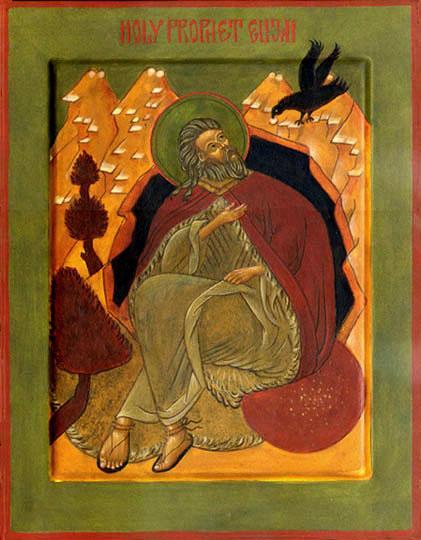
God’s providing for Elijah during a three-year drought
is one such story (1 Kings 17).
God brought a punishing drought upon Israel and He
told Elijah to travel to a specific stream (Cherith). God promised that the stream
would provide the water that he needed and that birds—specifically ravens—would
bring him food (1 Kings 17:4).
We are used to seeing birds who snatch bread out of
garbage cans, out of your hand, and sometimes off your picnic table. But when
was the last time you saw birds bring you anything? That’s the astounding part
of this story.
But not only did actual birds bring Elijah a meal.
They did it day after day—until, finally, the drought got so bad that the
stream itself dried up.
Next, God did something even more remarkable. He
told Elijah to walk 100 miles northwest to a foreign city to get fed there. Even
stranger, God did not promise that a rich man would take care of him there.
Rather, He promised that an impossibly poor widow would feed him.
When he arrived, Elijah found the widow. But she had
already nearly starved to death and had only enough flour and oil to make one
final loaf of bread.
But God gave her a promise, too. He promised that
she could share that handful of flour with Elijah and it would never run out. She
believed God, and the promise repeatedly came true.
Every day she would make a loaf of bread from the
last of her supplies. And the next day, when she returned to the pantry, there
would be the same amount of flour in the bin and oil in the jar as there was
the day before.
This miracle repeated itself for more than two
years—until the drought was over.
This is exactly like the promise that Jesus gives
to you in the words: “Seek first the kingdom of God and his righteousness, and
all these things will be added to you” (Matthew 6:33). He is not exaggerating—any
more than he was exaggerating when he spoke to the widow of Zerephath.
God does this all for the sake of Jesus who died
for you. “He who did not spare his own Son but gave him up for us all, how will
he not also with him graciously give us all things” (Romans 8:32)?
Many are growing weary of the constant war of words. Unkindness, unfair comparisons, and rejoicing in the sins of others fill our world with muck.
Print media, broadcast media and social media amplify anger into a seething
cauldron of rage. Campaign season adds fuel to the fire and chokes mailboxes
with glossy mailers filled with innuendo and twisted logic.
We long for peace—not just the absence of violence—but genuine peace in
our homes, in our neighborhoods, and in our political parties.
That genuine longing is a good and beautiful thing. But unless it leads
us to ask for God’s help, it will remain an empty hope. Peace is a fruit of the
Holy Spirit.
St. Paul makes this plain in Galatians 5:20-23. He lists “enmity,
strife, jealousy, fits of anger, rivalries, dissensions, [and] divisions” among
the works of the flesh. “But the fruit of the Spirit is love, joy, peace,
patience, kindness, goodness, [and] faithfulness” (ESV).
So, the best thing that you can do, if you want to
contribute to peace in our world, is to pray for God to give us peace.
Toward that end, the Church has inherited a
beautiful prayer that you could use. It begins, “Heavenly Father, God of all concord, it
is Your gracious will that Your children on earth live together in harmony and
peace.”
This reminds us that it is not only we who desire peace, but God Himself
wants us to live together in harmony and peace. In fact, all concord (i.e.
unity of heart) comes from God alone.
So, we go on to ask Him: “Defeat the plans of all those who would stir
up strife, destroy the weapons of those who delight in war and bloodshed, and,
according to Your will, end all conflicts in the world.”
It is not within our reach to outshout the voices of those who are
constantly stirring the pot. Nor can our puny weapons stop bloodshed in global wars.
But God can. So, we commend these things to Him.
But now, the prayer turns to ask for things that are within our reach.
“Teach us to examine our own hearts that we may recognize our own inclination
toward envy, malice, hatred, and enmity.”
This is the heart of true peace. It is not to scrutinize everybody
else’s heart to find out their sins. That accomplishes nothing but to make us
their judges and accusers. If you really want to change the world, you will
need to turn your gaze inward and root out the evil in your own heart.
But just as it is beyond our reach to stop foreign wars, it is also
beyond our ability to see our own sins. We desperately need God even for this.
So, we must humbly seek His help for this work.
So we pray, “Help us, by Your Word and Spirit, to search our hearts and
to root out the evil that would lead to strife and discord, so that in our
lives we may be a people at peace with all people.”
God’s help comes “by [His] Word and Spirit.” Only by making daily use
of the Holy Scriptures and by listening to the preaching of God’s Church can we
overcome our resistance to repentance and be given the gift to see our own
contribution to the strife and discord in our world.
When God has given you this gift, He has made you a conduit of His own
peace. Peace comes to your world not when everybody around you repents of their
sin, but when you do.
So, the ancient prayer ends by asking God to make us zealous not for
some utopian world peace that can be had without Jesus. But for the “peace . .
. which surpasses all understanding” (Philippians 4:7).
“Fill us with zeal for the work of Your Church and the proclamation of
the Gospel of Jesus Christ, which alone can bring that peace which is beyond
all understanding; through Jesus Christ, our Lord.”
If you believe in Jesus, I commend this prayer to you. Pray it in your
heart, in your home and in your Church. God will grant it.


For some visitors, our way of worship is like visiting an alien planet. Ancient scripted dialogue, congregational singing, standing, sitting and bowing once were done in common by Christians everywhere. But in the early 1800s, that began to change. As Revivalism swept across America, 1,800 years of familiar worship patterns around the globe gave way to free-form ways of worship.
It’s like the difference between an old-fashioned Square Dance and the dance at today’s High School gym. Dance without prescribed steps and moves is certainly free. But that very freedom can make dancers so painfully conscious of their performance that it keeps them off the floor. It’s not because they don’t know the rules but because there are no rules to know.
Square dance, on the other hand, invites people into the dance precisely because they don’t have to worry constantly about what to do next. There is a “caller” who tells you what to do and frees you to get lost in the dance. Let’s call him Red. “Allemande Left,” says Red, and everyone swings in a counter-clockwise circle with his or her corner.
The liturgy also had a caller. On just about every page you will see instructions written in red type. These are never read out loud. They are silent cues. Only the black-type is spoken out loud. Light-type is for the pastor and boldface is for the congregation. There’s a simple saying to help you remember: “Say the black; and do the red.”

Everything that you will need to participate in this historic form or worship is found in the hymnal. That’s the maroon book in front of you. The service starts on page 184.
There, the pastor will say the name of the Trinity while tracing the cross in the air. This recalls baptism. Christians, through the centuries, have first had the cross traced on their forehead, sternum, right shoulder and left when they were first brought to Baptism. There, they also heard the name of the Triune God for the first time.
After being reminded that God made us worthy to worship Him by washing away all our sins, we are invited to Confess our sins again. The forgiveness of sins is a perpetual need because we are “poor miserable sinners.” And this perpetual need is provided for when the risen Lord promised His disciples, “whosesoever sins you forgive, they are forgiven” (John 20:19-23).
Now we are ready to enter into God’s presence. The Introit (ĭn-trō′ĭt) is sung while the pastor makes his way up to the altar. This Psalm is found in your bulletin. Listen to the solo part, called the Antiphon, to learn the music and to learn the theme of the day.
Next we sing the Kyrie (′kir-ē-ā) page 186. Kyrie means, “Lord.” It is the cry that Blind Bartimaeus made as Jesus was passing through Jericho (Matthew 20:29-31). In the ancient world, “Lord, have mercy,” was the sort of thing that you would say only to a conquering king who was visiting town. We say it to receive King Jesus into our midst.
As Jesus promised, “where two or three are gathered together in My Name, I AM there in the midst of them” (Matthew 18:20). Jesus’ presence launches us immediately into a joyous Hymn of Praise! This song declares who God is and what He has done for us.
Before we sit down, again, the pastor greets us like Gabriel greeted Mary (Luke 1:28), and he prays a special prayer for the day. This Collect bundles all the special gifts that the readings will invite us to ask for and puts them into one brief prayer.
Every week, we hear three different readings from the Holy Scriptures. First, we read from the Old Testament—one of the 39 books that were written before Jesus was born (between 1,500 and 400 B.C.). Second, we read from the Epistles of Paul, Peter, or John. These were letters written to specific people and congregations during the first century of the Church’s life.

After the readings, we confess the Creed. This is a great gift to us because “no one can say, Jesus is Lord, except by the Holy Spirit” (1 Corinthians 12:3). The Nicene Creed has been confessed by every Christian—around the world and across the centuries since AD 325.
The Hymn of the Day was introduced by Martin Luther. It teaches the Word of God in clear and memorable words that are profound and moving. As you sing, think about how the words unpack the readings.
The Sermon should be self-explanatory. Feel free to jot down notes to ask about later. God wants you to understand his Holy Scriptures and, especially, how Jesus fulfilled all of the ancient prophecies to make atonement for sin and to establish the Kingdom of God on earth until He appears openly again, on the Last Day to do away with all evil.
The Offertory is our response to the sermon. We stand to sing this prayer asking God to do what He has just promised in His Word. It also serves to turn our minds to the way that Jesus will now fulfill those promises through the Sacrament of the Altar.
The Offerings are gathered between the Service of the Word and the Service of the Sacrament not merely because it is a convenient time. Nor are the offerings a mere necessity “to keep the lights on,” as they say. Rather, we have just heard how God created us, redeemed us, and sanctifies us out of His own sheer generosity—and not because of our own works, merits, or worthiness. Knowing that all we are and have comes from the hand of God, we rededicate ourselves and our possessions into His gracious hands. For we are confident that He will multiply them and hand them back to us in even greater abundance!
The Service of the Sacrament begins with the Prayer of the Church. Here Jesus intercedes for us. We pray for the Church—naming pastors and congregations. We pray for the world—naming countries and officials. We pray that God would protect our land from the evils of sin. We pray for people who are sick, suffering, mourning or in any need. And we pray all these things in full confidence that God will not look at our sins or deny our prayer because of them, but answer us for Jesus’ sake.
The Preface is sung in preparation to receive the true Body and Blood of the risen Christ. They come to a climax as we recognize that we are in the presence of “angels and archangels and with all the company of heaven.” The Old Testament believers and the New Testament believers BOTH join in our song.

Jesus instituted the Lord’s Supper by taking bread and giving thanks—just like when He multiplied the loaves. So also He gives thanks for the bread and wine by praying the Lord’s Prayer.
The pastor continues to speak “in the stead and by the command of Christ” while he recites the Words of Institution as a part of Jesus’ command to “Do this in remembrance of Me.” Through the speaking of Jesus, the bread and wine become My Body and My Blood.
Directing our eyes to the Body and Blood, now on the altar, we see the Lamb of God Agnus Dei (äg-nu̇s-ˈdā-ē) Who has died for the sins of the world—every single sin of every single person of all time since the fall and until the Last Day.
The Body and Blood of Christ are Distributed by the pastor to those who have been instructed thoroughly in the doctrine of the Bible. If you have not yet completed our membership instruction course, you may still come forward to receive a spoken blessing from the pastor.
When all communicants have returned to their places, we rise to sing the Nunc Dimittis. This is the very song that Simeon sang after he held the 40-day-old baby Jesus in his own hands (Luke 2:29-32).
After receiving the Body and Blood of God, there is not much more that one can say! So, the service wraps up fairly quickly. We pray that God would give us extended benefits from the Sacrament that we have just received. Then, we receive the Benediction that Jesus likely gave to His disciples as He parted from them on the day of His Ascension into heaven (Numbers 6:24-26).
For Jesus will come again—both at the Last Day and also Next Sunday!
Various forms of Millennialism (A.K.A. Chiliasm) dominate the landscape of popular Christianity. So much so that even the most fundamental Christian doctrines such as the Trinity, the Two Natures of Christ, and Justification through faith alone are eclipsed by arguments about the minutia of eschatology.
Millennium
is Latin for “1,000 years” – the period of time mentioned in Revelation 20:4-6—and
only there. Thus, the entire edifice of Millennialism is built on two verses in
the concluding chapters of the Bible.
But the
Reign of the Messiah (Christ in Greek) has a far deeper and broader importance in the
Bible. The Messiah’s reign on earth (i.e. the Kingdom of God) is among the most
central doctrines of the Bible. It is prophesied in the Old Testament, announced
in the Gospels and explicated by the Epistles.
By
widening the scope of our Bible inquiry to all of the passages that speak of
Christ’s reign, we can see a far more complete picture of the Messianic Kingdom
that will enable us better to understand the duration of 1,000 years which is found
in Revelation 20:1-6.
To search the Scriptures for the reign of Christ on earth, several key words will be useful. The first and most obvious is the verb, “to reign,” i.e. “to exercise sovereign power.” Both the Hebrew MaLaK (H4427) and the Greek Basileuo (G936) are verb forms of the word for King. (Strongs Concordance numbers are in parenthesis.)
Second, the
verb, “to judge,” in Hebrew DeeN (H1777), and in Greek krino
(G2919), after which the tribe of Dan is named, also looms large in our
discussion.
Perhaps
surprisingly, the verb, “to shepherd” Hebrew Ra’aH (H7462) and Greek poimaino
(G4165) is nearly as important. Quite often this word is translated as “rule”
because the context cannot mean literal shepherding. This should be no surprise
since, in the ancient world, kings were often considered shepherds.
These three verbs yield a rich field of Bible passages to study. Below I have simply arranged some of the principle passages about the Messianic reign to bring fundamental aspects of the Messianic Reign into focus.
First, the Messiah is none other than Yahweh, the LORD Himself. Second, His appearance and reign is in the future of the Old Testament. Third, His Kingdom, once established shall continue into eternity.Exodus 15:18 The
LORD shall reign (H4427) for ever and ever.
Psalm 146:10 The
LORD shall reign (H4427) for ever, even thy God, O Zion, unto all
generations. Praise ye the LORD.
Isaiah 40:11 He shall feed (H7462) his flock like a shepherd: he shall gather the lambs with his arm, and carry them in his bosom, and shall gently lead those that are with young.
Isaiah 52:7 How
beautiful upon the mountains are the feet of him that bringeth good tidings,
that publisheth peace; that bringeth good tidings of good, that publisheth
salvation; that saith unto Zion, Thy God reigneth! (H4427)
Jeremiah 23:5 Behold, the days come, saith the LORD, that I will raise unto David a righteous Branch, and a King shall reign (H4427) and prosper, and shall execute judgment and justice in the earth.

Matthew 2:6 And thou Bethlehem, in the land of Juda, art not the least among the princes of Juda: for out of thee shall come a Governor (H4910), that shall rule (G4165) my people Israel. (Quoting Micah 5:2).
Matthew 21:9 And the multitudes that went before, and that followed, cried, saying, Hosanna (NOW save us) to the Son of David: Blessed is he that cometh in the name of the Lord; Hosanna in the highest.
Matthew 27:37 And set up over his head his accusation written, THIS IS JESUS THE KING OF THE JEWS.
Acts 2:30-36 Therefore [David] being a prophet, and knowing that God had sworn with an oath to him, that of the fruit of his loins, according to the flesh, he would raise up Christ to sit on his throne; He seeing this before spake of the resurrection of Christ, that his soul was not left in hell, neither his flesh did see corruption. This Jesus hath God raised up, whereof we all are witnesses. Therefore being by the right hand of God exalted, and having received of the Father the promise of the Holy Ghost, he hath shed forth this, which ye now see and hear. For David is not ascended into the heavens: but he saith himself, The LORD said unto my Lord, Sit thou on my right hand, Until I make thy foes thy footstool. Therefore let all the house of Israel know assuredly, that God hath made that same Jesus, whom ye have crucified, both Lord and Christ.
1Timothy 6:15 Which in his times he shall shew, who is the blessed and only Potentate, the King of kings, and Lord of lords;
Hebrews 12:2 Looking unto Jesus the author and finisher of our faith; who for the joy that was set before him endured the cross, despising the shame, and is set down at the right hand of the throne of God.
Revelation 3:21 To him that overcometh will I grant to sit with me in my throne, even as I also overcame, and am set down with my Father in his throne.
Revelation 7:17 For the Lamb which is in the midst of the throne shall feed (G4165) them, and shall lead them unto living fountains of waters: and God shall wipe away all tears from their eyes.
Genesis 49:8, 10 Judah, thou art he whom thy brethren shall praise. . . The sceptre shall not depart from Judah, nor a lawgiver from between his feet, until Shiloh come; and unto him shall the gathering of the people be.
Jeremiah 23:6-8 In his days Judah shall be saved, and Israel shall dwell safely: and this is his name whereby he shall be called, THE LORD OUR RIGHTEOUSNESS. Therefore, behold, the days come, saith the LORD, that they shall no more say, The LORD liveth, which brought up the children of Israel out of the land of Egypt; But, The LORD liveth, which brought up and which led the seed of the house of Israel out of the north country, and from all countries whither I had driven them; and they shall dwell in their own land.
Ezekiel 20:33-34 As
I live, saith the Lord GOD, surely with a mighty hand, and with a stretched out
arm, and with fury poured out, will I rule (H7462) over you: And I will
bring you out from the people, and will gather you out of the countries wherein
ye are scattered, with a mighty hand, and with a stretched out arm, and with
fury poured out.
Ezekiel 34:13 And I will bring them out from the people, and gather them from the countries,
and will bring them to their own land, and feed (H7462) them upon the mountains
of Israel by the rivers, and in all the inhabited places of the country.
Micah 4:6-7 In
that day, saith the LORD, will I assemble her that halteth, and I will gather
her that is driven out, and her that I have afflicted; And I will make her
that halted a remnant, and her that was cast far off a strong nation: and the
LORD shall reign (H4427) over them in
mount Zion from henceforth, even for ever.

1 Samuel 2:10 The
adversaries of the LORD shall be broken to pieces; out of heaven shall he
thunder upon them: the LORD shall judge (H1777) the ends of the earth; and he
shall give strength unto his king, and exalt the horn of his anointed (Messiah).
Psalm 9:7-8 But
the LORD shall endure for ever: he hath prepared his throne for judgment. And
he shall judge (H1777) the world in righteousness, he shall minister judgment
to the people in uprightness.
Psalm 47:7-8 For
God is the King of all the earth: sing ye praises with
understanding. God reigneth (H4427)
over the heathen: God sitteth upon the throne of his holiness.
Psalm 96:9-10, 13
O worship the LORD in the beauty of holiness: fear before him, all the
earth. Say among the heathen that the LORD reigneth (H4427): the
world also shall be established that it shall not be moved: he shall judge the
people righteously. . . Before the LORD: for he cometh, for he cometh to
judge (H1777) the earth: he shall judge the world with righteousness, and the
people with his truth.
Zechariah 14:8-9 And it shall be in that day, that living waters shall go out from Jerusalem; half of them toward the former sea, and half of them toward the hinder sea: in summer and in winter shall it be. And the LORD shall be king over all the earth: in that day shall there be one LORD, and his name one.
Romans 15:12 And
again, Esaias saith, There shall be a root of Jesse, and he that shall rise to
reign (G936) over the Gentiles; in him shall the Gentiles trust. (Citing Isaiah 11:10)
Revelation 2:26-27 And he that overcometh, and keepeth my works unto the end, to him will I give power over the nations: And he
shall rule (G4165) them with a rod of iron; as the vessels of a potter shall
they be broken to shivers: even as I received of my Father.
Revelation 11:15 And the seventh angel sounded; and there were great voices in heaven, saying,
The kingdoms of this world are become the kingdoms of our Lord, and of
his Christ; and he shall reign (G936) for ever and ever.
Revelation 12:5 And
she brought forth a man child, who was to rule (G4165) all nations with a rod
of iron: and her child was caught up unto God, and to his throne.
Revelation 19:15-16 And out of his mouth goeth a sharp sword, that with it he should smite the nations: and he shall rule (G4165) them with a rod of iron: and he treadeth the winepress of the fierceness and wrath of Almighty God. And he hath on his vesture and on his thigh a name written, KING OF KINGS, AND LORD OF LORDS.
Isaiah 32:1
Behold, a king shall reign (H4427) in righteousness, and princes shall rule in
judgment.
Jeremiah 33:20-21
Thus saith the LORD; If ye can break my covenant of the day, and my covenant of
the night, and that there should not be day and night in their season; Then
may also my covenant be broken with David my servant, that he should not have a
son to reign (H4427) upon his throne; and with the Levites the priests, my
ministers.
Matthew 19:28 And
Jesus said unto them, Verily I say unto you, That ye which have followed me, in
the regeneration when the Son of man shall sit in the throne of his glory, ye
also shall sit upon twelve thrones, judging (G2919) the twelve tribes of
Israel.
Luke 22:30 That
ye may eat and drink at my table in my kingdom, and sit on thrones judging (G2919)
the twelve tribes of Israel.
John 21:16 He saith to him again the second time, Simon, son of Jonas, lovest thou me? He saith unto him, Yea, Lord; thou knowest that I love thee. He saith unto him, Feed (G4165) my sheep.
1 Corinthians 6:2 Do ye not know that the saints shall judge (G2919) the world?
Acts 20:28 Take heed therefore unto yourselves, and to all the flock, over the which the Holy Ghost hath made you overseers, to feed (G4165) the church of God, which he hath purchased with his own blood.
Revelation 22:4-5 And they shall see his face; and his name shall be in their foreheads. And there shall be no night there; and they need no candle, neither light of the sun; for the Lord God giveth them light: and they shall reign (G936) for ever and ever.

1 Corinthians 15:25 For he must reign (G936), till he hath put all enemies under his feet. (Note:
Revelation 20:4 And I saw thrones, and they sat upon them, and judgment was given unto them: and I saw the souls of them that were beheaded for the witness of Jesus, and for the word of God, and which had not worshipped the beast, neither his image, neither had received his mark upon their foreheads, or in their hands; and they lived and reigned (G936) with Christ a thousand years.
Revelation 20:6 Blessed and holy is he that hath part in the first resurrection: on such the second death hath no power, but they shall be priests of God and of Christ, and shall reign (G936) with him a thousand years.
Welcome to St. Paul’s Lutheran Church in Kemmerer and Our Saviour Lutheran Church in Evanston.
If our order of worship is unfamiliar, you may appreciate this brief explanation of its meaning.
We are congregations of the Lutheran Church--Missouri Synod. The LCMS is a church body that was formed in 1847 specifically to help her churches and pastors resist cultural drift and stay faithful to the Holy Scriptures.
Faithfulness to the Scriptures means that “We believe, teach, and confess that [they are] the sole rule and standard according to which all dogmas together with all teachers should be estimated and judged. . , as it is written Ps. 119:105: Thy Word is a lamp unto my feet and a light unto my path. And St. Paul: Though an angel from heaven preach any other gospel unto you, let him be accursed, Gal. 1:8.” (Formula of Concord, Epitome 1).
The Formula of Concord is one of eleven documents that state clearly what the Scriptures say on points that have been contested and confused at various times and in various places. These eleven documents are as follows:
All eleven of these documents are also available for listening at: LibrivoxBookOfConcord
In 1538 Martin Luther got to the heart of the Christian religion as follows:
What I have hitherto and constantly taught concerning this I know not how to change in the least, namely, that by faith, as St. Peter says, we acquire a new and clean heart, and God will and does account us entirely righteous and holy for the sake of Christ, our Mediator. And although sin in the flesh has not yet been altogether removed or become dead, yet He will not punish or remember it. And such faith, renewal, and forgiveness of sins is followed by good works. And what there is still sinful or imperfect also in them shall not be accounted as sin or defect, even [and that, too] for Christ’s sake; but the entire man, both as to his person and his works, is to be called and to be righteous and holy from pure grace and mercy, shed upon us [unfolded] and spread over us in Christ. 3 Therefore we cannot boast of many merits and works, if they are viewed apart from grace and mercy, but as it is written, 1 Cor. 1:31: He that glorieth, let him glory in the Lord, namely, that he has a gracious God. For thus all is well. 4 We say, besides, that if good works do not follow, faith is false and not true. (SA XIII)
DONATE HERE - 100% of your donations* to Two Kingdoms One Lord go to support our ministry in Wyoming's public square. This includes:

America’s Declaration of Independence depends on the truth that “all
men are created equal.” Saturday, July 4th, celebrates its 250th anniversary.
To say that all people are created is to say that there is a creator. This
observation is so obvious as to be “self-evident.” Every person who ever lived knows
that he or she did not appear spontaneously but came from another.
That creator is usually referred to as God. The Declaration refers to him
as “Nature’s God” who wrote the “Laws of Nature.”
What the Declaration does not do is to define or describe who the God
of Nature is. Christians regularly assume that Nature’s God is Jesus Christ.
And they are not wrong.
But, for Thomas Jefferson—and the signers of the Declaration—it was
enough to acknowledge that every person, tribe and nation is answerable to a
common creator. Because of this, no person has an inherent right to rule
another. Hence, all are equal.
Nations that fail to acknowledge this fact quickly devolve into
tyranny, murder and chaos. That’s what happened in Revolutionary France and in
the now defunct Soviet Union.
In fact, the 1954 Congress amended the Pledge of Allegiance in response
to Soviet atheism. On Flag Day, President Eisenhower signed the bill behind the
phrase, “one nation, under God.”
It is a good thing that we acknowledge a common creator. But it is an even better thing to know that Creator to be the Triune God.
Because to know the
Father and the Son and the Holy Spirit as One God is to know the Creator as the
God who suffered, died and rose again for the sins of His creatures.
King David said, “Blessed is the nation whose God is
the LORD” (Psalm 33:12). This is not meaningless repetition. To say that God is
the LORD is to confess that the Triune God of Holy Scripture—not Zeus, not
Isis, not Molech, not Thor—is the God who created heaven and earth.
And the Bible goes on to teach us “that Jesus
Christ is Lord, to the glory of God the Father”
(Philippians 2:11). Jesus is the eternal Son of the eternal Father who with the
Holy Spirit created all things. This same God redeemed you by His suffering and
death on the cross and is the author and source of the one true faith.
And any nation whose God is this God will be a
blessed nation.
David, of course, knows that nations as nations cannot
have personal faith. Only people can do that. But David also knew that every
decision that rules a nation is made by people who either believe that “God is
the LORD” or not.
What David might not have foreseen is a nation that
was not ruled by a hereditary king but by the people themselves. And that
brings us back to America’s 250th anniversary.
Governments instituted among men are more or less
godly as the people are more or less godly. Elected officialdom is more or less
godly as the individuals elected to office govern their own lives under the one
true God.
As we celebrate the 250th anniversary of America,
let us first submit our own lives to the Word of the one true God. Then, let us
be bold to bring that faith to bear on all that we say and do to discharge our
duties as godly citizens of the United States of America.
This nation, too, can be blessed whose God is the LORD.


This coming Sunday Christians around the world will gather for the third
great feast of Jesus.
The first one was in December. It is the annual celebration of the
birth of Jesus. “God so loved the world that He gave His only-begotten Son”
(John 3:16). We exchange gifts in remembrance of Jesus as the Father’s Gift to
the world.
The second one was in early April this year. It moves with the Old
Testament festival of Passover because it was on Passover “that Christ
died for our sins according to the scriptures; And that he was buried, and that
he rose again the third day according to the scriptures” (1 Corinthians 15:3-4).
The third great feast of Christianity also moves
with the Old Testament festival calendar. As the Old Testament Feast of Weeks was
held seven weeks after Passover, so the New Testament festival of Pentecost is
celebrated seven weeks after Easter Sunday.
The book of Acts makes this clear. “And when the
day of Pentecost was fully come, they were all with one accord in one place”
(Acts 2:1 [KJV]). Pentecost is a Greek word that simply means “fifty”—seven
weeks plus Sunday.
Fifty days after the angel of death passed over the
homes of those who had the blood of the lamb on their door-posts, and after the
Children of Israel passed through the Red Sea on dry land, they celebrated the
giving of the Law at Mt. Sinai.
This is called the “Feast of Weeks” in Exodus 34:22
and in Deuteronomy 16. By the time Jesus was born, it was called “Pentecost.” And
after Jesus rose from the grave and ascended into heaven, He did one more
magnificent thing while the Jews were gathered in Jerusalem for Pentecost.
“And suddenly there came a sound from heaven as of
a rushing mighty wind, and it filled all the house where they were
sitting. And there appeared unto them cloven tongues like as of fire, and
it sat upon each of them. And they were all filled with the Holy Ghost, and
began to speak with other tongues, as the Spirit gave them utterance” (Acts 2:2-4).
Just as it is instructive to read the suffering, death and resurrection
of Jesus against the backdrop of the Jewish Passover, so it is helpful to read
the events of Acts 2 against the backdrop of the Jewish feast of weeks—the
momentous events that happened at Mt. Sinai.
“[T]here were thunders and lightnings, and a thick
cloud upon the mount, and the voice of the trumpet exceeding loud; so that all
the people that was in the camp trembled. And Moses brought forth the
people out of the camp to meet with God; and they stood at the nether part of
the mount. And mount Sinai was altogether on a smoke, because the LORD
descended upon it in fire” (Exodus 19:16-18).
At the first Pentecost, the twelve tribes of Israel
had been freed from slavery in Egypt and assembled together to meet with God. At
the second Pentecost, the twelve Apostles were freed from slavery to the devil
and assembled together in the Upper Room.
At the first Pentecost, God was present in the form
of fire on the top of Mt. Sinai. At the second Pentecost, God was present in
the form of fiery tongues on the Apostles.
At the first Pentecost, God spoke in a disembodied
thunderous Hebrew voice so that “[W]hen all the people saw the thunder and the
flashes of lightning and the sound of the trumpet and the mountain smoking, the
people were afraid and trembled, and they stood far off and said to Moses, ‘You
speak to us, and we will listen; but do not let God speak to us, lest we die’”
(Exodus 20:18-19 [ESV]).
At the second Pentecost, God spoke in every
language of the world, through the voices of fishermen, tax-collectors, and ordinary
men. And, rather than scattering in fear, “the multitude came together” to hear
the Word of God speaking in their own language in which they were born (Acts
2:6, 8).
This is the glory of Pentecost! Rejoice and be glad that you can gather
in churches still today! And that you, by Jesus’ power, can hear the voice of
God preached in your own native tongue.

We live in a world that has been forever
changed. It was changed by the resurrection of Jesus Christ from the dead.
For all of our lives, and for two millennia
before that, we have lived in a world where the promised Messiah has come. He
has finished His battle with Satan and has crushed the Serpent’s head. Jesus
has ended the Old Testament and ushered in the New Testament in His blood.
Jesus’ resurrection is the indispensable foundation
of the Christian faith, its hope, of Christian love. St. Paul put it this way,
“if Christ be not raised, your faith is vain; ye are yet in your sins. Then
they also which are fallen asleep in Christ are perished. If in this life only
we have hope in Christ, we are of all men most miserable. But now is Christ
risen from the dead, and become the firstfruits of them that slept” (1
Corinthians 15:17-20).
Nevertheless, we struggle daily with doubt.
Despair harasses us. And love does not come easy. Our struggle is to live in
the light of Easter—to internalize the reality of the resurrection.
The first step is to put yourself in the
shoes of its first witnesses. You are no different than those who lived through
the first Easter. They also struggled because, as St. John tells us, “As yet
they knew not the Scriptures, that He must rise again from the dead” (John
20:9).
They didn’t know that He was risen. The
clues were all there. The body was gone. The linen cloth was lying there. The
napkin was folded, in a place by itself. But still, they went home dejected.
They interpreted the clues to mean something
false. Mary could only conclude that “They have taken away the Lord from the
tomb” (John 20:13). Not realizing the true significance of what they
witnessed, they interpreted them as more evidence that Jesus’ enemies were
still prevailing. “They did it. They are in control. We don’t know what they
did to His body,” thought His disciples.
But they were wrong. And we know otherwise. For
us, these clues are signs of the resurrection. We cherish these artifacts, and
revel in the empty tomb. What a difference perspective makes! We know the
Scriptures. They did not.
And today, in our lives and in our circumstances,
we too are given clues that Jesus has deliberately left for us. We see His acts
in the world, every single day. World events are never random. The good and the
bad and the ugly—all events are of His making.
Jesus chose Judas, His betrayer, to be a
disciple. The Father gave Pontius Pilate the authority to crucify Him. God Himself
made Caiaphas High Priest, that year.
And the same remains true today. God is
directing current events. And God has brought you into the world precisely for this
moment. Whether God or you approve of what is happening, God remains in
control.
You don’t yet know HOW God “will work [them]
together for the good of those who love God” (Romans 8:28). But, because of
the resurrection of Jesus, you know THAT He will.
Future generations will look at us and say,
“How could they NOT rejoice?” Because they will see with hindsight.
We, on the other hand, live by faith. The
Scriptures interpret the clues and make us glad—even before God’s plan is clear.
If we are still in sorrow, bitterness and
anger, it is only because we—like the first visitors to the empty tomb—do not
yet know the Scriptures. Observing the world apart from the Scriptures will
make us misinterpret the clues and make us despondent.
So, let us consciously live in the light of
Easter. That means to believe God’s promises for you as surely as if they have
already happened. Because, in Christ, they have.

For the second year in a row, our congregation is working on a
challenge to read the Bible from cover to cover during one calendar year. That comes
out to 82 verses, or three and a quarter chapters per day.
It’s quite doable and it has many benefits. I encourage you to join us
in this challenge.
The first benefit is that it will dispel the myth that the Bible is
just too big and too complicated for the average person to tackle. Anyone—and I
mean anyone—who starts reading the Bible at page one soon learns that it is
very straightforward.
Most of the Bible simply describes events that happened during the
history of the world. It is not written in cryptic code but in historical
narrative.
The Bible is only confusing when false teachers cherry-pick a passage
from here and a passage from there and artificially connect them together into
something that the Bible never says.
When you read the Bible cover to cover, don’t try to read between the
lines. Just see for yourself how its stories connect naturally. Adam’s story
flows into Abraham’s story. And Abraham’s flows into Moses’ story and Moses’
story flows into Jesus’ story.
Read it on its own terms and you will soon become familiar with the
story of the human family, created and sustained by God. As you are reading
these historical events, you will see how God is deeply involved in very ordinary
lives.
Sometimes His involvement is a miraculous deliverance from an
impossible situation. Sometimes it is a frightening judgment on those who thumb
their noses at Him.
The blessings—like bumper crops, victory in battle, and restoration of
broken relationships—may seem like pure luck in the non-biblical world. But the
Bible makes clear that all of them are God’s direct fulfillment of His
promises.
Likewise, judgments—like famine, military disaster, and the fall of
entire nations—are not random, but are directly connected to the people’s sins
and rebellion.
Taken together, both sorts of stories are written so that you would
take God ever more seriously. “Now these things happened
to them as an example, but they were written down for our instruction” (1
Corinthians 10:11).
When you read of God’s terrible punishments, you are stirred to repent.
And when you read of God’s miraculous deliverances, you are emboldened to trust
His promises without fearing that He will let you down.
That’s the second main benefit of Bible reading. If you approach it
like an empty fairy tale, you will be bored. But when you remember that these
things really happened, you will be moved to repentance and faith.
Repentance is when you take your sins seriously and are no longer
content to cave in to every temptation that you feel. Faith is when you are no
longer afraid of what others can do to you but you trust that God’s promises to
care and provide for you are true.
And that brings us to Lent.
Lent is a time of renewal because Lent is a season that invites us to
take God more seriously today than we did yesterday. Lent is not about giving
up chocolate or some such thing. Lent is really about a renewal of life that is
born of repentance.
Fasting can be helpful. But if you really want renewal, go to God’s
Word. It will do more for you than anything that you can do for yourself.
Reading the Bible for yourself will reduce your intimidation over Bible
reading and fortify you against some of the false teaching that Satan will
throw your way. Reading the Bible will give you reasons to fear, love and trust
in God more than anything. Also, reading the Bible will teach you to gather
with fellow believers in weekly worship.
When you take God’s involvement in your life seriously, the blessing
you find by gathering with other believers will crown your Lenten repentance
with renewal and Easter joy. God promises it.