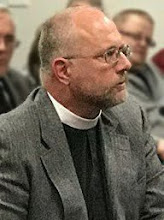
Pro-life congregations can find 1,001 things to do. Some of them are as simple as extending communion-rail blessings to the unborn children as well as those born. Others may join the Life Chain on the first Sunday of October or participate in a local March for Life in January. Others may partner with a pregnancy resource center to support mothers in need and so address the fears that drive abortion.
But this article is about being, not doing. Our lives as Christians flow from who we are in Christ. In order to address this foundation, LCMS Life Ministry has provided an important new resource. Marriage, Life and Family: Reflecting the Holy Trinity. It is offered to help congregations and pastors begin to plumb the depths of Lutheran theology through engagement with the most pressing challenges of the day.
Ultimately, LCMS congregations do not engage marriage, life and family as mere social issues. We engage them because through them we have an unprecedented opportunity to proclaim the Father who sends His Son to die for the sins of the world and who, from the cross, gives His Holy Spirit to all who believe.
Engagement with the world today cannot help but see an exponentially increasing chaos. Families are in disarray. Culture is in upheaval. People are set against one another, isolated, angry and hurting. The Christian worldview that once tied communities together has dissolved into rampant nihilism. As a result, the Church is not only marginalized, but attacked with increasing ferocity.
The first step in being a pro-life congregation is to receive these challenges as a gift from God and not a curse to be avoided. No cross can harm God’s people. Knowing this, we can approach the challenges with joy and not foreboding. We can be certain that the more we engage the world with the word of God, the more we will grow.
For Lutherans especially, our respect for the proper distinction between law and Gospel can be exploited by Satan to cause us to be timid and tentative in applying the law to our world. This is disastrous because it mutes three aspects of the Gospel itself.
First, it forgets the beautiful fact that our bodies are created by the very hand of God. His word about how to use them is not a foreign intrusion, but the very words of the One in Whom we live. Second, it also mutes our confession that Christ has died to take away the sin of the world. The promise of the resurrection goes beyond the removal of guilt. It promises freedom from sin itself—freedom from the self-destructive desires and impulses that enslave the human race.
Most importantly of all, marriage, life and family are gifts that God provides to help us see Him in our daily lives. The newest resource from LCMS Life Ministry is designed to start this discussion. It is only a start. But as the LCMS thinks on these matters together, all will benefit from the vistas that God will provide.
Saturday, March 14, 2020
Thursday, February 13, 2020
Church should be your excuse for missing everything else.
By Grayson Gilbert
"We ought to find delight that we can be united in a local body that functions together in service to one another (1 Cor. 12:12-27). In this unique giftedness being exercised among the members of a local church, particularly through the gifting of teachers, we then come to grow in maturity as we attain to the unity of the faith and knowledge of the Son of God (Eph. 4:11-13). These teachers also equip us for works of service for the edification of that local church body (Eph. 4:12), which in particular is expressed through bearing one another’s burdens (Gal. 6:2), encouraging one another (1 Thess. 4:13-18; 5:11), building each other up in our most holy faith (Jd. 1:20), pushing one another on in perseverance to the end (Heb. 10:23-25), and pouring out compassion (Eph. 4:32), forgiveness (Col. 3:13), love (Jn. 13:34; 1 Jn. 4:7), brotherly devotion (Rom. 12:10)—and even simply putting up with one another (Eph. 4:2)."
This beautiful paragraph is found in a thoughtful and powerful essay that we all do well to read and ponder.
"We ought to find delight that we can be united in a local body that functions together in service to one another (1 Cor. 12:12-27). In this unique giftedness being exercised among the members of a local church, particularly through the gifting of teachers, we then come to grow in maturity as we attain to the unity of the faith and knowledge of the Son of God (Eph. 4:11-13). These teachers also equip us for works of service for the edification of that local church body (Eph. 4:12), which in particular is expressed through bearing one another’s burdens (Gal. 6:2), encouraging one another (1 Thess. 4:13-18; 5:11), building each other up in our most holy faith (Jd. 1:20), pushing one another on in perseverance to the end (Heb. 10:23-25), and pouring out compassion (Eph. 4:32), forgiveness (Col. 3:13), love (Jn. 13:34; 1 Jn. 4:7), brotherly devotion (Rom. 12:10)—and even simply putting up with one another (Eph. 4:2)."
This beautiful paragraph is found in a thoughtful and powerful essay that we all do well to read and ponder.
Thursday, January 30, 2020
Sixth Annual WPN Conference
How Christianity Invented Religious Freedom
Friday, January 24, 2020
10:00 am Dr. James Tonkowich, The Early Christian Roots of Religious Freedom1:30 pm Dr. James Tonkowich, The Christian Ideas that Drove America's Founding Documents
3:30 pm Dr. James Tonkowich, Current Attacks on Religious Liberty
6:00 pm Banquet
Rev. Jonathan Lange, Christianity's Unique and Essential Contribution to Public Discourse
- Note: Files are linked on Dropbox. The opening screen invites you to sign up for an account, but this is not necessary to downloading the files. Simply decline and move to the file.
PRESENTER
James Tonkowich, D. Min. is a Senior Contributor to The Stream, is a freelance writer, speaker and commentator on spirituality, religion and public life who has contributed to a wide variety of opinion websites and publications.
He is the author of The Liberty Threat: The Attack on Religious Freedom in America Today from St. Benedict Press and Pears, Grapes, and Dates: A Good Life After Mid-Life. Jim also serves as Director of Distance Learning at Wyoming Catholic College and is host of the college’s weekly podcast, “The After Dinner Scholar.”
Tuesday, January 21, 2020
CrossTalk: Serious Sin, Serious Forgiveness
The full and free forgiveness of sins stands at the very heart of the Christian message. Yet, today, both in the Church and in society at large, there is a great deal of confusion about the very nature of sin and why it needs forgiving at all.
That confusion starts with the shallow notion that sin is nothing more than disobedience to the ten commandments. To be sure, it is that. But unless you think more deeply, you will likely consider these commandments to be nothing more than a random list of rules.
When you think of the commandments as a random list of rules—whether given by God or given by the Church—you will never understand the enormous cost of breaking them.
Secular contempt for religion comes from the false idea that an ancient and out-of-touch hierarchy (the Church) is trying to impose morality on the rest of the world. But Christians who replace the arbitrary dictates of men with the arbitrary dictates of God don’t improve matters very much.
While it is true—even vital—to understand that God is the source of all morality, you will not understand the nature of sin until you understand that God’s commands are not arbitrary.
The truth is that the commandments start with creation. The human body, by nature, cannot tolerate certain things. If it gets too hot or too cold, you die. A long fall or a bullet can kill you. Poison will do you in. You don’t need to be told these things. You can learn them from experience.
But there are also dangers to human life that are less obvious but just as deadly. These we are told about in the ten commandments.
If you trust God, you will take his word for it. If you don’t trust Him, you may reject His guidance. But either way, breaking the ten commandments does the same irreparable harm to human life. “In the day you eat of it, you shall surely die” (Genesis 2:17 ESV).
Now we are to the real point. God teaches the ten commandments not as an arbitrary list of “dos” and “don’ts” but as the very structure of human life. To break them is to break life itself.
Sins are like arsenic taken into the body. Once there, it inexorably works death. There is no antidote. Nothing can slow its destructive effect. Nothing can remove it from the body.
A single sin and death is inevitable. It is entirely impossible for sin to enter into a body without working death. Is that all there is to say? Are we simply destined for death? Yes, and no.
While there is absolutely nothing—not even God—that can stop the deadly effect of sin, there is a solution that only God can offer. He, and He alone, can absorb the deadly effects of sin in Himself. In fact, that is exactly what He has done.
“When Christ came into the world, he said, ‘Sacrifices and offerings you have not desired, but a body you have prepared for me’” (Hebrews 10:5). In Christ, God has made Himself a body in which to absorb all of sin’s poison.
“The wages of sin is death” (Romans 6:23). That will never change. But Jesus has provided a way to take that death into Himself. That is called “forgiveness.” That is the Good News at the heart of the Christian faith.
While sin is far more serious than you ever thought, Christ’s forgiveness is even more serious, still. “By believing, you may have life in his name” (John 20:31).
That confusion starts with the shallow notion that sin is nothing more than disobedience to the ten commandments. To be sure, it is that. But unless you think more deeply, you will likely consider these commandments to be nothing more than a random list of rules.
When you think of the commandments as a random list of rules—whether given by God or given by the Church—you will never understand the enormous cost of breaking them.
Secular contempt for religion comes from the false idea that an ancient and out-of-touch hierarchy (the Church) is trying to impose morality on the rest of the world. But Christians who replace the arbitrary dictates of men with the arbitrary dictates of God don’t improve matters very much.
While it is true—even vital—to understand that God is the source of all morality, you will not understand the nature of sin until you understand that God’s commands are not arbitrary.
The truth is that the commandments start with creation. The human body, by nature, cannot tolerate certain things. If it gets too hot or too cold, you die. A long fall or a bullet can kill you. Poison will do you in. You don’t need to be told these things. You can learn them from experience.
But there are also dangers to human life that are less obvious but just as deadly. These we are told about in the ten commandments.
If you trust God, you will take his word for it. If you don’t trust Him, you may reject His guidance. But either way, breaking the ten commandments does the same irreparable harm to human life. “In the day you eat of it, you shall surely die” (Genesis 2:17 ESV).
Now we are to the real point. God teaches the ten commandments not as an arbitrary list of “dos” and “don’ts” but as the very structure of human life. To break them is to break life itself.
Sins are like arsenic taken into the body. Once there, it inexorably works death. There is no antidote. Nothing can slow its destructive effect. Nothing can remove it from the body.
A single sin and death is inevitable. It is entirely impossible for sin to enter into a body without working death. Is that all there is to say? Are we simply destined for death? Yes, and no.
While there is absolutely nothing—not even God—that can stop the deadly effect of sin, there is a solution that only God can offer. He, and He alone, can absorb the deadly effects of sin in Himself. In fact, that is exactly what He has done.
“When Christ came into the world, he said, ‘Sacrifices and offerings you have not desired, but a body you have prepared for me’” (Hebrews 10:5). In Christ, God has made Himself a body in which to absorb all of sin’s poison.
“The wages of sin is death” (Romans 6:23). That will never change. But Jesus has provided a way to take that death into Himself. That is called “forgiveness.” That is the Good News at the heart of the Christian faith.
While sin is far more serious than you ever thought, Christ’s forgiveness is even more serious, still. “By believing, you may have life in his name” (John 20:31).
Friday, December 6, 2019
CrossTalk: Lamps in the darkness
Thomas Edison gave us a tremendous gift of convenience. But by replacing oil lamps with electric light bulbs, he also deprived us of the daily lesson of lamps.
I was reminded of this recently in Jesus’ parable of the ten virgins (Matthew 25:1-13). The whole thing centers around ladies with lamps. I realized that they shared an experience that most of us have never known.
More than that, I realized that God Himself put oil lamps at the very center of religious experience. From Mt. Sinai until the destruction of the temple in 70 A.D.—over 1,500 years—the priests of Israel entered the holy place twice a day to refill and to trim seven lamps.
Those lamps were not just for lighting. They were a lesson. They taught about the nature of our human existence.
Every lamp has three essential components. It is a vessel made of clay. It is filled with oil. And, it is tipped by fire. The fire is the point of the whole thing. Without fire the rest of the lamp makes no sense.
Jesus Christ is the Light of the world. His is the light that was intended to shine from each and every human being. From the beginning, Jesus is the point of human existence. Faith is not an added “extra.” It is the essence of life.
In ancient days, fire and light always went together. Today, LEDs make it possible to have light without heat. But light from a burning lamp is always powerful and contagious. Such is the light of Christ. It is not “tame” light; it is fire.
In a lamp, the light does not fuel itself. Rather, it is fueled by the oil. Throughout the Scriptures, oil is identified with the Holy Spirit. So, also here. The light of Christ must be constantly sustained by the Holy Spirit. Should the Holy Spirit depart, the light will go out.
That was the problem that the five foolish virgins were having. The made no provision to replenish the oil of the Holy Spirit. So, when the Bridegroom arrived, they had lost Christ.
It is a constant temptation to admire our own faith and think it could never go out. This is the reason the foolish virgins didn’t think to replenish their oil. The wise, on the other hand, saw that the more brightly the flame of faith shone, the more quickly it used up their oil.
Christians who experience the brightest burning faith, are those who should be the most intent on hearing God’s Word and renewing the Holy Spirit. They do not need less oil, but more.
The lamp is a vessel of clay fashioned to hold oil. In the same way, our vessel of clay was fashioned to hold the Holy Spirit. The LORD God formed Adam from clay and breathed into Him the Spirit of Life (Genesis 2:7).
Unlike any other animal in the world, human beings are deliberately made by the hands of God to be vessels of the Holy Spirit so that our clay might show forth the Light of Christ into the darkness.
As the days are growing every shorter and ever darker, light is needed now more than ever.
I suppose that’s why lamps and candles have always been a part of Christian worship. They are a constant reminder that our vessels of clay were made to be filled with the Holy Spirit and on fire with the Light of Christ.
We are born with our clay. The oil and fire are God’s gift through the preaching of His Word.
I was reminded of this recently in Jesus’ parable of the ten virgins (Matthew 25:1-13). The whole thing centers around ladies with lamps. I realized that they shared an experience that most of us have never known.
More than that, I realized that God Himself put oil lamps at the very center of religious experience. From Mt. Sinai until the destruction of the temple in 70 A.D.—over 1,500 years—the priests of Israel entered the holy place twice a day to refill and to trim seven lamps.
Those lamps were not just for lighting. They were a lesson. They taught about the nature of our human existence.
Every lamp has three essential components. It is a vessel made of clay. It is filled with oil. And, it is tipped by fire. The fire is the point of the whole thing. Without fire the rest of the lamp makes no sense.
Jesus Christ is the Light of the world. His is the light that was intended to shine from each and every human being. From the beginning, Jesus is the point of human existence. Faith is not an added “extra.” It is the essence of life.
In ancient days, fire and light always went together. Today, LEDs make it possible to have light without heat. But light from a burning lamp is always powerful and contagious. Such is the light of Christ. It is not “tame” light; it is fire.
In a lamp, the light does not fuel itself. Rather, it is fueled by the oil. Throughout the Scriptures, oil is identified with the Holy Spirit. So, also here. The light of Christ must be constantly sustained by the Holy Spirit. Should the Holy Spirit depart, the light will go out.
That was the problem that the five foolish virgins were having. The made no provision to replenish the oil of the Holy Spirit. So, when the Bridegroom arrived, they had lost Christ.
It is a constant temptation to admire our own faith and think it could never go out. This is the reason the foolish virgins didn’t think to replenish their oil. The wise, on the other hand, saw that the more brightly the flame of faith shone, the more quickly it used up their oil.
Christians who experience the brightest burning faith, are those who should be the most intent on hearing God’s Word and renewing the Holy Spirit. They do not need less oil, but more.
The lamp is a vessel of clay fashioned to hold oil. In the same way, our vessel of clay was fashioned to hold the Holy Spirit. The LORD God formed Adam from clay and breathed into Him the Spirit of Life (Genesis 2:7).
Unlike any other animal in the world, human beings are deliberately made by the hands of God to be vessels of the Holy Spirit so that our clay might show forth the Light of Christ into the darkness.
As the days are growing every shorter and ever darker, light is needed now more than ever.
I suppose that’s why lamps and candles have always been a part of Christian worship. They are a constant reminder that our vessels of clay were made to be filled with the Holy Spirit and on fire with the Light of Christ.
We are born with our clay. The oil and fire are God’s gift through the preaching of His Word.
Tuesday, November 5, 2019
CrossTalk: Theodicy
“If God is good, how could he damn some people to hell just because they never got a chance to hear about Jesus?”
That’s a question that I have been asked over the years. Sometimes it’s an honest question. Sometimes it is not. Human beings are capable of deep compassion for people we have never met. We are also capable of inventing all kinds of excuses to avoid humbling ourselves before God.
Whether the question is asked in honesty or dishonesty, the conversation rarely leads to a satisfactory answer. So, today I want to put something in writing. It will not satisfy all people, but I hope it will satisfy the heart that is pious and compassionate about people you have never met.
The first thing that needs to be said about this question is this: It is a theodicy. That means it is an attempt to justify God. That is so backwards as to be nonsensical. God has sent His only begotten Son in order to justify you, not the other way around. Any God who needs our justification is not worthy of the name.
The next thing that should be said is that the question itself hides a number of dubious assumptions. First, it assumes that some people never got a chance to hear the Word of God. Yet everyone who ever asked the question already knows enough about God to ask the question. So, where are these people who haven’t heard?
If you meet one, let me know. I would be glad to tell him. Better yet, tell him yourself. If it’s a benighted tribe in Africa, fly there and tell them. Or take all the money you spend on yourself and give it to a missionary. It’s no good complaining that God is stingy with His word when you yourself are sitting on a pot of gold.
Second, the question assumes that people are damned because they don’t believe. That’s not what Christianity teaches. People are damned because they are in open rebellion against their Creator. Jesus comes to save you from this condition—and His salvation is received by believing.
It is the peculiar blunder of our day to think of faith as some sort of accomplishment on my part that makes God happy with me. No! Faith is the natural, healthy posture of any human being towards his or her Creator. Lack of it is a problem akin to a mental health issue—except worse.
Those that have faith in the true God have been healed of a deadly disease. Those who reject it can’t blame the Physician.
Why do some people reject the Physician’s cure and others receive it? That is the real question. And it cannot ever be answered for someone else. It can only be answered for yourself. You can go to the library and read a Bible. You probably have several in your own home. If you read it, it will tell you to go to church. So, go.
Find a church that teaches every last word of the Bible and attend worship and Bible study. If you do, God will bring you from unbelief into the true faith (or He will keep you in the true faith if you already have it). If you are not doing this, the real question is neither about God nor about noble savages on the other side of the globe.
Rest assured that the God who gave His only begotten Son to be crucified for the sins of the whole world loves every person on the globe more than you could even imagine. He does absolutely everything to save them that could possibly be done. He has also done everything to save you. Believe it, or not.
Monday, September 16, 2019
CrossTalk: God sets the solitary in families
The most universal fact of human existence is that every single person who has ever lived has both a mother and a father. There are no exceptions to this rule. While biologically true of all animals, this has special significance for human beings.
Feelings of family connectedness are among the most powerful of human emotions. The bond of love between father, mother and child is unparalleled among animals. Even where those bonds are broken, our deepest longings testify to the profundity of our loss.
None of this is accidental. “God sets the solitary in families” (Psalm 68:6a). Creation itself teaches that the family structure of father, mother and child is integral to the very image of God. “God created man in His own image, in the image of God He created him; male and female created He them. Then God blessed them, and God said to them, Be fruitful, and multiply” (Gen 1:27-28).
God said, “It is not good that man should be alone” (Genesis 2:18). We are created for relationships. First comes parent and child. Marriage of husband and wife is equally profound. Family is the basic building block of all society.
Christian thinkers have observed that the God-given triangle of father-mother-child is nothing less than an echo of God’s own nature. From eternity, God is not solitary, but He is a community of Three.
While these words are true, they also expose raw nerves. Contrary to our deepest yearnings, family brokenness is everywhere. We all experience it. If we ourselves are not missing father, mother or child we all love someone who is.
We live in a time and place that has forgotten the importance of family and does more to attack family bonds than to protect them. The devastation of this inattention to family is getting harder and harder to ignore. Our hearts ache for ourselves, friends and loved ones who suffer in the wake of broken relationships.
One response to this intense pain is to deny the importance of relationships lost. We desperately try to convince ourselves that families are really not that important. We attribute our pain to something else and numb ourselves to avoid further hurt. But it doesn’t help. Eventually, reality breaks through our defenses and the devastating pain returns with a vengeance.
Jesus knows and cares. Never forget that He is the eternal Son of the eternal Father. He knew your nature before He even created it. So, His atonement for the sins of the world is also for the healing of relationships broken by sin. This is the great news of Christ’s Church!
Christ gives His Church on earth for two present blessings. First, by Jesus’ blood and forgiveness Christians can forgive one another fully and completely. Relationships that were once destroyed are fully retrievable in Christ. There is always hope. Loneliness is not inevitable.
Second, even where the reconciliation of God-given relationships is rendered impossible by unrepentance or by the finality of death, still there is hope. “God sets the solitary in families,” is not just a statement about being born. It is also a promise for all who are reborn.
By Baptism, God is begetting new Children and building a new family of God. This family is no cheap substitute. The family of God in Christ Jesus is the true family that God intended all along. Holy Communion is about a new community made possible through the blood of Jesus.
The Holy Christian Church is here for the lonely. It is God’s place of healing for everyone devastated by broken relationships.
Feelings of family connectedness are among the most powerful of human emotions. The bond of love between father, mother and child is unparalleled among animals. Even where those bonds are broken, our deepest longings testify to the profundity of our loss.
None of this is accidental. “God sets the solitary in families” (Psalm 68:6a). Creation itself teaches that the family structure of father, mother and child is integral to the very image of God. “God created man in His own image, in the image of God He created him; male and female created He them. Then God blessed them, and God said to them, Be fruitful, and multiply” (Gen 1:27-28).
God said, “It is not good that man should be alone” (Genesis 2:18). We are created for relationships. First comes parent and child. Marriage of husband and wife is equally profound. Family is the basic building block of all society.
Christian thinkers have observed that the God-given triangle of father-mother-child is nothing less than an echo of God’s own nature. From eternity, God is not solitary, but He is a community of Three.
While these words are true, they also expose raw nerves. Contrary to our deepest yearnings, family brokenness is everywhere. We all experience it. If we ourselves are not missing father, mother or child we all love someone who is.
We live in a time and place that has forgotten the importance of family and does more to attack family bonds than to protect them. The devastation of this inattention to family is getting harder and harder to ignore. Our hearts ache for ourselves, friends and loved ones who suffer in the wake of broken relationships.
One response to this intense pain is to deny the importance of relationships lost. We desperately try to convince ourselves that families are really not that important. We attribute our pain to something else and numb ourselves to avoid further hurt. But it doesn’t help. Eventually, reality breaks through our defenses and the devastating pain returns with a vengeance.
Jesus knows and cares. Never forget that He is the eternal Son of the eternal Father. He knew your nature before He even created it. So, His atonement for the sins of the world is also for the healing of relationships broken by sin. This is the great news of Christ’s Church!
Christ gives His Church on earth for two present blessings. First, by Jesus’ blood and forgiveness Christians can forgive one another fully and completely. Relationships that were once destroyed are fully retrievable in Christ. There is always hope. Loneliness is not inevitable.
Second, even where the reconciliation of God-given relationships is rendered impossible by unrepentance or by the finality of death, still there is hope. “God sets the solitary in families,” is not just a statement about being born. It is also a promise for all who are reborn.
By Baptism, God is begetting new Children and building a new family of God. This family is no cheap substitute. The family of God in Christ Jesus is the true family that God intended all along. Holy Communion is about a new community made possible through the blood of Jesus.
The Holy Christian Church is here for the lonely. It is God’s place of healing for everyone devastated by broken relationships.
Subscribe to:
Comments (Atom)