Sunday, August 20, 2017

Freetown, Sierra Leone Disaster

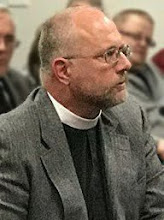
Rev. Lawrence Kamanda
Dr. Hein has received word from one of our students, Rev. Lawrence Kamanda (Grace Lutheran Church, Freetown).

Concerning the devastation of the recent mudslides and flooding in Freetown, last Monday, August 14th. Members in all of the Lutheran Churches in Freetown were affected. 325 members have lost their homes, 16 members have lost their lives; and one congregation experienced 8 members’ deaths.

Donated funds will be handled by appropriate officials of the LC-MS Disaster Response to make sure the funds are responsibly handled and go directly to those individuals and families affected by the disaster for whatever they need: for temporary shelter, food, clothing, and medical supplied. etc.


Please remember these saints in your prayers, and consider a donation on the web site below. You may earmark it for mudslide relief.

Operation Pastoral Education West Africa (Where Pastor Lange taught last September)
LCMS Disaster Response

Friday, August 18, 2017

CrossTalk: The Sun Was Darkened

The Gospel accounts of Jesus’ crucifixion speak of a three-hour period of darkness while Jesus hung on the cross. St. Luke writes, “It was about the sixth hour (noon), and darkness was over the whole land until the ninth hour (3:00pm), while the sun’s light failed.” (23:44-45).

At first, this sounds like a solar eclipse. But you should notice that several details don’t fit an eclipse. For one, the total eclipse will only last for two and a half minutes. That’s a far cry from the three hours described in the Gospel. Even the partial phase will last for less than the three hours.

Even more telling, eclipses happen because the moon is in the sky during the day-time, and was back-lit by the sun. We call this the “new moon” phase, and it is opposite of the “full moon” phase, when the moon is in the night sky, and is front-lit by the sun. These two phases of the moon occur about 15 days apart. They cannot happen on the same day.

The Bible tells us that Jesus was crucified during the feast of the Passover, which always occurred at the full moon of the Jewish month of Nissan. In other words, it is utterly impossible for an eclipse to occur during the Passover festival because the moon is on the wrong side of the world to block out the sun.

All of this leads us to realize that whatever happened to the sun’s light during Christ’s crucifixion cannot be explained as a solar eclipse. It must have been something else that caused “the sun’s light to fail.”

Outside of the Bible, in 52 AD, a pagan Roman historian also seems to have seen and written about the crucifixion darkness. We don’t have this book anymore (at least we haven’t found it yet). But the later historian, Africanus, apparently had it in hand when he wrote, “Thallus, in the third book of his histories, explains away the darkness [at Jesus’ death] as an eclipse of the sun—unreasonably as it seems to me.”

Even though Thallus didn’t know enough astronomy and history to rule out an eclipse, he couldn’t deny the darkness that his eyes saw. Africanus also quoted a Greek historian, Phlegon, who witnessed the same darkness.

“In the fourth year of the 202nd Olympiad (i.e., AD 33) there was ‘the greatest eclipse of the sun’ and that ‘it became night in the sixth hour of the day [i.e., noon] so that stars even appeared in the heavens. There was a great earthquake in Bithynia, and many things were overturned in Nicaea.’”

Note that Phlegon connects the darkness with a great earthquake. The coincidence of these two events matches the Bible’s account perfectly. “And behold, the curtain of the temple was torn in two, from top to bottom. And the earth shook, and the rocks were split.” (Matthew 27:51).

Notice, too, that Phlegon seems to be writing from Bithynia, which is about a thousand miles north of Jerusalem. No eclipse could explain that. The moon is simply not large enough to cause a swath of total darkness a thousand miles wide.

This raises a question about how large was the area that was darkened on Good Friday. It seems clear that it was more than just Jerusalem and Judea, but also Rome, Athens, and Nicaea. Is it possible that the darkness covered the entire earth? We have not yet found any historical sources saying so, but the possibility is certainly there.

What is, however, certain and beyond all doubt is that Jesus’ suffering and death covers all the earth. His cross is the true light of the world, the source of true illumination to every tribe and tongue and place and time.

Whatever we see by the light of the cross, we see more clearly and more brightly than we can ever see by the light of the sun. “I am the light of the world. He that follows Me shall not walk in darkness, but shall have the light of life” (John 8:12).

Thursday, August 17, 2017

Judge Ruth Neely Appeals to the Supreme Court

Issues Etc. radio interview: An Appeal to the Supreme Court by a Wyoming Judge Removed for Her Beliefs on Homosexual Marriage – Pr. Jonathan Lange, 8/17/17

Saturday, July 22, 2017

Peer Pressure and Faith in College:

Six Tips to Immerse Yourself in Campus Church Life


As a Christian and a student at a liberal, secular university, I can say that the peer pressure to conform to non-Christian beliefs and values is staggering. The general atmosphere that surrounds many colleges and universities in the US is the belief that a student, no matter their background, should attend college with an open mind to new ideas. This seems great; on the outside, an open mind is presented as a belief that could only lead to an improved lifestyle. However, this belief leads some Christians to innocently question why they believe what they do, and then to a stronger, more assertive reason not to believe the same thing they did when they first came to college.

It begins as soon as you get to the dorms. Making friends can be difficult. You’re at a new school, and you might not know anyone there. Unfortunately, it is especially difficult when the majority of students seem to be participating in activities that you were told were wrong: underage drinking, drugs, and sexual activity—right in the room, down the hall, or on the floor where you live. They also invite you to participate, and no one is there to tell you it’s wrong anymore. What’s the harm? More than the fact that two-thirds of the activities mentioned above are illegal, (and that they also go against God’s law), it can affect your school performance. You’re at school to learn, and partying the nights away with friends can lead to extremely unproductive semesters. I’ve known people who have had to drop out of school because of this.

Beside the new friends you make, there’s the ever-present idea that what your parents believed was old fashioned, counterintuitive, and hateful. Being a Christian often means disagreeing with the common views on campus, such as social or political views, or controversial topics such as same-sex marriage and abortion. Speaking against those topics can lead to many heated arguments—and the loss of “friends.” It seems as if open discussion is only encouraged when you agree with the socially acceptable viewpoints.The important thing to remember is that disagreements are never going to be easy, and you’re not going to please everyone.

1 Peter 2:9 says, “You are a chosen race, a royal priesthood, a holy nation, a people for His own possession, that you may proclaim the excellencies of Him who called you out of darkness into His marvelous light.” God calls us to proclaim his Word! Just because you’ve now moved away from home and no one is there to push you to attend church doesn’t mean your own self-discipline should slip. Believe me, it’s just as easy to skip class as it is to skip out on church on Sunday mornings. Many campuses, or the surrounding cities or towns, will have a Lutheran church that you should be able to join. In fact, look for a church home at www.lcms.org/LCMSU. Here are six tips you can try to immerse yourself in the campus church life:
  1. Go to Bible studies during the week.
  2. Attend mid-week events, such as social activities with other students.
  3. Complete service activities with your church group at the local food banks or shelters.
  4. Take a weekend to go to a conference or listen to a speaker to strengthen your faith.
  5. Volunteer your time at the campus church center—help with whatever tasks that may need to be done!
  6. Join a leadership group or committee to help with service projects, funding, and outreach.
If your campus church doesn’t have some of the suggestions listed above, talk with your pastor about how you can help your church become more involved.
    Leaving the faith isn’t an instant change.  It starts gradually...
Leaving the faith isn’t an instant change. It starts gradually; it may start with your new friends’ snide remarks and activities. Perhaps, as you go to class, you may notice that some of the professors you look up to don’t agree with Christianity, and you may wonder if you’ve been wrong this whole time. You might decide to skip church one week because of a big test on Monday, and then at the end of the semester you look back having never entered the sanctuary.

Don’t let peer pressure or the effects of college affect your faith. If you find that you’re struggling to maintain a consistent Christian mindset, call your parents or your pastor back home. Join a Lutheran campus ministry and become involved. I know it can be difficult, but keep up the faith in college. Don’t let the devil tempt you with short-term results and dead-end promises. Remember also that you are a child of God, and that you will always find forgiveness in Christ. Stand up for what you believe in. Let Jesus be your light, and seek Him in all that you do.


Reposted from The CPH Blog: The Word Endures

Tuesday, June 20, 2017

CrossTalk: The Eternal Trinity Means Eternal Love

Go ye, therefore, and make disciples of all nations, baptizing them in the name of the Father, and of the Son, and of the Holy Spirit, and teaching them to observe whatsoever I have commanded you.” Matthew 28:19.
This Great Commission is one of the most familiar passages in the Bible. It also contains what is certainly the most quoted phrase in all of Christendom.
For nearly 2000 years almost every Christian worship service, ceremony, prayer, or devotion has begun with the invocation, “In the name of the Father, and of the Son, and of the Holy Spirit.” This is true of Eastern Orthodox, Roman Catholic, Coptic, Lutheran, Presbyterian, Episcopal, Methodist and dozens of other denominations and traditions.
Even those denominations that do not use the phrase on a daily basis, still use it at every baptism. The name of the triune God is the most wide-spread and enduring of any Christian phrase or formula, bar none.
This is even more remarkable when you notice that Matthew 28:19 is the only place in the entire Bible where it is found. While there are plenty of other phrases which our repeated throughout the Bible, this phrase is only found once! So why has it become so universally used?
Answer: It is the perfect summary of the Christian faith. God Himself commands us to speak it upon every person who wishes to be a Christian. It is the final revelation of the name of God. It is more than just a metaphor about God. It is more than a handy nick-name for God. It is God’s name: the full and perfect statement of who God is.
God is Father. God is not merely “like a father.” He is the only Father. As Jesus says, “Call no man your father on earth, for you have one Father, who is in heaven” Matthew 23:9. For this reason Jesus refers to Him everywhere are “the Father.”
Unlike human fathers, He didn’t just become a father at some point in time. It’s not like a solitary, nameless god sat around for an eternity before He decided to have a son. Otherwise He wouldn’t “be” Father. He would only “have become” a father.
When an early heretic (Arius) started teaching that “there was a time when the Son was not,” all Christians knew instinctively that he was denying the very nature of God. The eternal fatherhood of God lies at the very heart of the Christian faith. Which also means that the eternal Son of God lies at the very heart of the Christian faith.
If there ever was a time when the Son did not exist, that would mean that there was a time when God was not Father. And if there ever was a time when God was not Father, there was a time when God was not loving the Son and that the Son was not loving the Father.
But “God is love,” 1 John 4:8! It is impossible to think of God not loving. A “god” who is not pouring all that He is and all that He has into someone other than Himself is no god at all. So, His only-begotten Son, is eternally receiving all that He is and all that He has from the Father. And if He is receiving all that the Father is, then the Son, too, is “God of God, Light of Light, very God of very God.” (Nicene Creed).
This is love. It is total self-giving. It is total receptivity. Love is not partial, nor self-centered, nor self-sufficient. This is both what God wants to do for you, and how God wants you to be toward all others. He wants to pour into you all that He is and all that He has; By this infinite gift, you are freed to pour out all that you are and all that you have not only for friends, but also for those who hate and persecute you.
So, the name of the Father, and of the Son, and of the Holy Spirit is not only the full and complete revelation of who God is, it also the full and complete revelation of what love is. Who could ask for more?

Monday, June 19, 2017