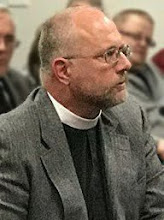
On Thursday, January 22, I and a few friends walked down Constitution Avenue in our nation's capitol. It had a profound impact on me and I would like to share it with you.
The date for the walk is significant. We walked on January 22 because it was on that day in 1973 that the United States Supreme Court handed down the decision called Roe v. Wade. As a direct result of those men’s opinion, America has lost over 55 million people in the past 42 years.
The friends who joined me were about 500,000 people from every state in the union. Imagine gathering the entire population of the state of Wyoming into a few city blocks. That’s the March for Life.
We arrived about 11:30 and the crowd steadily thickened until the 1:00 start time. Speeches were coming from a huge stage, but we were too far back to hear them. When we tried to find a better place, we only succeeded in getting separated from our group. Twenty anxious minutes passed before we found them again.
There was a man pushing through the crowd and yelling out important-sounding things. But once close enough to hear, they were only curses and ugly insults hurled at us, the marchers. Saddened, we turned away. Those closer to him tried to talk calmly and reason with him. Some offered him words of comfort. Nobody tried to shout him down. Nobody reviled in return.
Once the March began it was more like a shuffle. Imagine a half-million people walking down twelve city blocks. It took us over 30 minutes just to get off the grass and onto the street. But we were moving. I was excited to get going, anticipating the destination.
There were many other groups, each one had a different pace--a different way of dressing. Some loud and singing, others were totally silent. Some individuals didn't come to march. They came to preach at the marchers. We ignored them. We had came to walk. One showed terrible and disturbing photographs. It subdued us. You could feel an intense wishing--not so much that they would stop, but that they weren’t real.
As time dragged on I became more anxious to arrive. I wanted to speed up, but there was little hope of that. Time passed slowly and progress was slower still. My phone rang and filled my thoughts with problems and challenges that I faced elsewhere. But on we marched.
In the end, it took us three full hours to walk 12 city blocks. When we finally reached our destination I looked around for a sign that we had arrived--a concluding speech, or a bell to ring, a vista for a picture--anything. But there was nothing of the sort. We milled around for a while and left for home in pairs or small knots.
This ending may sound disappointing. I admit that I was disappointed at the time. But on the plane ride home, I had a chance to reflect. The March for Life was a lot like life. We spend so much of our lives hastening on to the next thing, anxious to reach a goal. We are confronted with obstacles and annoyances along the way. Many times the people we are walking with begin to get on our nerves. We are forced to hear things and look at things that we would prefer not to. Sometimes this is facing up to the truth, but not always.
And when we get to the destination that we had anticipated for so long, there is no trumpet blast, no dazzling light. No one makes speeches and the orchestra does not play a finale. We just take it in for a moment and move on towards the next destination.
I will go back to the March for Life. My second time, though, will be different. I will be more patient for the destination to come. I will be less anxious about the time that is passing. I will be more appreciative of the people around me; and less annoyed by the myriad distractions. Because I have learned that the point of it all is in the walking. The point is in the participation; it is in the joy of loving people that you have never met and will never know. Loving people for love's sake. That’s the March for Life.
And while I am waiting for my next chance to go to Washington D. C., I will be applying all of these very same lessons to my daily walk here and now. Life is not about our destinations, or our goals. It is not about efficiency or productivity. It is about walking together; it’s about staying on the path that Jesus walked; it is about forgiving and loving and understanding and bearing with one another.
Not a bad lesson to begin with as we enter into the walk of Holy Lent.
Tuesday, February 17, 2015


Tuesday, July 15, 2014
CrossTalk: True Freedom
Freedom of religion means not only freedom to worship, it also means freedom to pray whenever, wherever and however you will. It means freedom to speak of your creator openly and without fear that you will be degraded in the classroom or disqualified from public service. It means freedom to operate your business according to God’s standards without the threat of fines or of being fired (as the Supreme Court recently ruled and the Congress of the United States overwhelmingly passed in the Religious Freedom Restoration Act). This is the first of the freedoms protected by the Bill of Rights. Our founders knew that it is foundational for the very existence of a free society.
When God first breathed His life into mankind, He created us to have a share in His own free existence. God, who is compelled by nothing and no-one, is utterly free. In this freedom He chose to love us by sharing His own freedom with all of humankind. This makes us human–different from the animals. For this reason the Constitution of the United States stipulates: “Congress shall make no law respecting an establishment of religion, or prohibiting the free exercise thereof.”
It was not always so. Those who wrote these words were the grateful inheritors of an idea that was introduced into the world through Christianity. Before Christ, religion was the realm of the government. Citizens were forced to worship according to the cult of the city or country in which they lived. To be Egyptian meant to worship Horace, Isis and the rest. To be Greek meant to worship the gods and godesses of the Pantheon. To be Phoenecian meant to worship Molech with child sacrifice.
The crucifixion and resurrection of Jesus of Nazareth changed all that. He broke the tyranny of Satan by His very presence in the world. As Christ’s Word spread throughout the ancient world, it turned the relationship between government and religion topsy-turvey. For the first time in the world’s existence, religion was not defined by those in power. Rather, all power and authority was defined and would be judged by the one true God – Jesus Christ. This means that every human being, no matter how powerful or how marginalized, stands equally under the same Lord and God. For people and nations who understand this, tyranny is restrained and laws intend to measure up to a standard of justice which is not merely human, but divine.
On the other hand, where this idea is lost, power reverts to a law unto itself and laws are passed to expand that power to make the power-holders into gods. That’s why it is so troubling for me to see Christianity marginalized in the name of “freedom from religion.” I am not troubled just for myself or my religious group. I am troubled because I can see far enough ahead to know that such a mindset diminishes freedom for all people. The loss of Christian foundations will inevitably lead back to the enslavement of all people. Consider what happened to freedom in the former Soviet Union or in present day North Korea where all faith is suppressed. Freedom FROM religion never freed anybody.
We are witnessing a great struggle in America today to come to terms with the relationship between freedom, power, and faith. Whether you are a Christian or not, your attitude and your understanding of these things matters. We have a Constitution and a Bill of Rights that calls for our nation to be governed by these lessons. But daily we are being reminded that unless we remain constantly watchful over our elected representatives, executors and judges, these lessons and these freedoms can and will be lost.
Christians who wish to uphold these great, human freedoms need not be shrill or frantic. You can be a strong witness to freedom merely by steadfastly exercising them in your own life. If you want to keep the freedom to worship, then don’t just talk about it! Worship freely and worship often! If you want to keep the freedom to speak God’s Word to your neighbor, then speak it today! Don’t be pressured into silence either by social stigmas or legal fears. If you want people to see the benefit of a nation “under God,” then place all your own actions and words and will under God yourself. In this way, learn for yourself the truth of Jesus’ words, “If the Son sets you free, you will be free indeed” (John 8:36). This is the freedom that changed the entire world.
When God first breathed His life into mankind, He created us to have a share in His own free existence. God, who is compelled by nothing and no-one, is utterly free. In this freedom He chose to love us by sharing His own freedom with all of humankind. This makes us human–different from the animals. For this reason the Constitution of the United States stipulates: “Congress shall make no law respecting an establishment of religion, or prohibiting the free exercise thereof.”
It was not always so. Those who wrote these words were the grateful inheritors of an idea that was introduced into the world through Christianity. Before Christ, religion was the realm of the government. Citizens were forced to worship according to the cult of the city or country in which they lived. To be Egyptian meant to worship Horace, Isis and the rest. To be Greek meant to worship the gods and godesses of the Pantheon. To be Phoenecian meant to worship Molech with child sacrifice.
The crucifixion and resurrection of Jesus of Nazareth changed all that. He broke the tyranny of Satan by His very presence in the world. As Christ’s Word spread throughout the ancient world, it turned the relationship between government and religion topsy-turvey. For the first time in the world’s existence, religion was not defined by those in power. Rather, all power and authority was defined and would be judged by the one true God – Jesus Christ. This means that every human being, no matter how powerful or how marginalized, stands equally under the same Lord and God. For people and nations who understand this, tyranny is restrained and laws intend to measure up to a standard of justice which is not merely human, but divine.
On the other hand, where this idea is lost, power reverts to a law unto itself and laws are passed to expand that power to make the power-holders into gods. That’s why it is so troubling for me to see Christianity marginalized in the name of “freedom from religion.” I am not troubled just for myself or my religious group. I am troubled because I can see far enough ahead to know that such a mindset diminishes freedom for all people. The loss of Christian foundations will inevitably lead back to the enslavement of all people. Consider what happened to freedom in the former Soviet Union or in present day North Korea where all faith is suppressed. Freedom FROM religion never freed anybody.
We are witnessing a great struggle in America today to come to terms with the relationship between freedom, power, and faith. Whether you are a Christian or not, your attitude and your understanding of these things matters. We have a Constitution and a Bill of Rights that calls for our nation to be governed by these lessons. But daily we are being reminded that unless we remain constantly watchful over our elected representatives, executors and judges, these lessons and these freedoms can and will be lost.
Christians who wish to uphold these great, human freedoms need not be shrill or frantic. You can be a strong witness to freedom merely by steadfastly exercising them in your own life. If you want to keep the freedom to worship, then don’t just talk about it! Worship freely and worship often! If you want to keep the freedom to speak God’s Word to your neighbor, then speak it today! Don’t be pressured into silence either by social stigmas or legal fears. If you want people to see the benefit of a nation “under God,” then place all your own actions and words and will under God yourself. In this way, learn for yourself the truth of Jesus’ words, “If the Son sets you free, you will be free indeed” (John 8:36). This is the freedom that changed the entire world.
Friday, May 23, 2014
Persecution in the Ball Diamond
Sam is in high school. He’s one of the good guys, a well-liked athlete who loves the outdoors, good books and being Lutheran.
He also leads the team of acolytes at his church, training the other young men and setting an example for what reverence and piety look like in the Divine Service.
He’s in church. He’s in Bible class. He is what it means to be Lutheran.
And because he is Lutheran, and because church matters to him, because he actually believes that Jesus is there for him in real time, flesh and blood on Sunday morning, he sets school and sports and friends aside to be there.
He knows everything else pales in comparison to what his Savior has to give him.
And because he is Lutheran, and because he longs to be where God has promised to be, he made a hard choice that turned out to be not so hard at all.
+++
He told his coach during Holy Week that he wouldn’t be able to attend all the scheduled baseball practices, that he would have to leave early to make it to all the services.
And his coach, who really ought to have patted Sam on the back and told him what a wise choice he had made, instead warned him, “Sam, we all have to make decisions in life. We have to decide what our priorities are.”
That is to say, “Sam, church doesn’t matter. Baseball does.”
And yet how did our young LCMS hero respond?
“I know our decisions matter . . . and that is why I’m going to church.”
This is just the beginning of an excellent article by Adrianne Heins. Read the rest of it HERE.
Tuesday, April 29, 2014
CrossTalk: Resurrection Realities
Now that the Easter bunnies and chocolate eggs have been put away, the stores are already redecorated for the next holiday. But some of us are not so ready to move on. After all, the first Easter was not over after a single day.
It’s true that Easter Sunday was huge! Jesus appeared first to Mary Magdalene at the tomb (John 20:14-17; Mark 16:9). There, He also showed Himself to several other women (Matthew 28:9-10). Later that same day, Jesus appeared to Simon Peter (Luke 24:34). In the late afternoon, He spent some hours walking and talking with Cleopas and another disciple (Luke 24:13-32; Mark 16:12). That evening He appeared again to Peter and to the women and to Cleopas and his friend -- together with a whole roomful of disciples at once. There He talked with them, ate with them, and generally rubbed shoulders with them (Luke 24:36-49; Mark 16:14; John 20:19-23). But that doesn't end the story!
On the following day Jesus was still alive. His followers didn’t pack up the decorated eggs and start looking forward to Mothers’ Day. On the contrary, they continued to see dead men walking! It wasn’t the Zombie Apocalypse. These were saints, holy people of God, who came back to life at the earth-shattering moment of Jesus’ death. These people left the graveyard and entered into Jerusalem to walk and talk and be seen by many different people (see Matthew 27:52-53).
Nor did Jesus stop His Easter activities on the day after Easter. A week later, He appeared again to the disciples gathered in the upper room. But this time, Thomas was there, too (John 20:26-29). About a week after that, Jesus appeared to Peter, James, John, Thomas, Nathanael and to other apostles who had left Jerusalem and were fishing on the sea of Galilee (John 21:1-14). In fact, Jesus kept appearing to various and sundry people for almost six weeks after Easter until He withdrew His visibility on the day of Ascension. “He presented himself alive to them after his suffering by many proofs, appearing to them during forty days and speaking about the kingdom of God” (Acts 1:13).
Paul sums up the list of Jesus’ appearances like this, “He appeared to Peter, then to the twelve. Then he appeared to more than five hundred brothers at one time, most of whom are still alive, though some have fallen asleep. Then he appeared to James, then to all the apostles." Notice the phrase, "most of whom are still alive” (1 Corinthians 15:5-7). Paul wrote these words in 56 AD only about 25 years after Easter. So recently that most of the 500 people who saw Jesus during the 40 days after Easter were still around to tell and retell their stories, to fill in details and to answer questions. Think back to something important that happened to you in 1989 and you will have an idea how vivid and reliable their memories were.
I rehearse all these details for three reasons. First, I thought you might appreciate knowing how many eyewitnesses there were to the resurrection. Your confidence should grow knowing that they were cross-examined and checked out by so many people, for so many years. The trustworthiness of the Bible is also strengthened when you know that it was written during the life-times of thousands and thousands of people who saw and heard the events themselves. Knowing all this, you will either be strengthened in what you already believe or you will need to re-examine why you don’t believe it.
Second, the extended time of Jesus’ appearances after His resurrection, can help you understand why the Christian Church doesn’t celebrate Easter on one day only. We keep the Easter celebration going for seven full weeks! Even then, Easter is never really ever “over.”
Still, we are living in a world where Jesus is arisen. This is the third point. The resurrection is not merely ancient history. It is a present reality. The passage of time has not tarnished the brightness of the resurrection in the least. We may get distracted from thinking about it. But the energy and joy of Easter is still every bit as fresh as it was on that first Easter two millennia ago. Nothing has changed. Jesus is still risen from the dead. Satan has still been conquered. The risen body and blood of the Risen Lord is still available for you.
For this reason, your life today can and should be lived as though Christ died yesterday, arose this morning, and will come again tomorrow. Happy Easter!
It’s true that Easter Sunday was huge! Jesus appeared first to Mary Magdalene at the tomb (John 20:14-17; Mark 16:9). There, He also showed Himself to several other women (Matthew 28:9-10). Later that same day, Jesus appeared to Simon Peter (Luke 24:34). In the late afternoon, He spent some hours walking and talking with Cleopas and another disciple (Luke 24:13-32; Mark 16:12). That evening He appeared again to Peter and to the women and to Cleopas and his friend -- together with a whole roomful of disciples at once. There He talked with them, ate with them, and generally rubbed shoulders with them (Luke 24:36-49; Mark 16:14; John 20:19-23). But that doesn't end the story!
On the following day Jesus was still alive. His followers didn’t pack up the decorated eggs and start looking forward to Mothers’ Day. On the contrary, they continued to see dead men walking! It wasn’t the Zombie Apocalypse. These were saints, holy people of God, who came back to life at the earth-shattering moment of Jesus’ death. These people left the graveyard and entered into Jerusalem to walk and talk and be seen by many different people (see Matthew 27:52-53).
Nor did Jesus stop His Easter activities on the day after Easter. A week later, He appeared again to the disciples gathered in the upper room. But this time, Thomas was there, too (John 20:26-29). About a week after that, Jesus appeared to Peter, James, John, Thomas, Nathanael and to other apostles who had left Jerusalem and were fishing on the sea of Galilee (John 21:1-14). In fact, Jesus kept appearing to various and sundry people for almost six weeks after Easter until He withdrew His visibility on the day of Ascension. “He presented himself alive to them after his suffering by many proofs, appearing to them during forty days and speaking about the kingdom of God” (Acts 1:13).
Paul sums up the list of Jesus’ appearances like this, “He appeared to Peter, then to the twelve. Then he appeared to more than five hundred brothers at one time, most of whom are still alive, though some have fallen asleep. Then he appeared to James, then to all the apostles." Notice the phrase, "most of whom are still alive” (1 Corinthians 15:5-7). Paul wrote these words in 56 AD only about 25 years after Easter. So recently that most of the 500 people who saw Jesus during the 40 days after Easter were still around to tell and retell their stories, to fill in details and to answer questions. Think back to something important that happened to you in 1989 and you will have an idea how vivid and reliable their memories were.
I rehearse all these details for three reasons. First, I thought you might appreciate knowing how many eyewitnesses there were to the resurrection. Your confidence should grow knowing that they were cross-examined and checked out by so many people, for so many years. The trustworthiness of the Bible is also strengthened when you know that it was written during the life-times of thousands and thousands of people who saw and heard the events themselves. Knowing all this, you will either be strengthened in what you already believe or you will need to re-examine why you don’t believe it.
Second, the extended time of Jesus’ appearances after His resurrection, can help you understand why the Christian Church doesn’t celebrate Easter on one day only. We keep the Easter celebration going for seven full weeks! Even then, Easter is never really ever “over.”
Still, we are living in a world where Jesus is arisen. This is the third point. The resurrection is not merely ancient history. It is a present reality. The passage of time has not tarnished the brightness of the resurrection in the least. We may get distracted from thinking about it. But the energy and joy of Easter is still every bit as fresh as it was on that first Easter two millennia ago. Nothing has changed. Jesus is still risen from the dead. Satan has still been conquered. The risen body and blood of the Risen Lord is still available for you.
For this reason, your life today can and should be lived as though Christ died yesterday, arose this morning, and will come again tomorrow. Happy Easter!
Tuesday, February 25, 2014
CrossTalk: Love Your Enemies
Last night at the Lange house we sat down to watch Macbeth, the classic play by Shakespeare. No wonder it is a classic! In a couple of hours, Shakespeare is able to engage you in thinking about some of the most profound issues of life. The major issue comes early in the play and sets the stage for all that follows.
Good king, Duncan, rewards Macbeth as a loyal subject and a favorite general. He promotes Macbeth to a high position, and loves and trusts him in every way possible. But when the king came to visit him in his castle, Macbeth murders him. What?!
“That makes no sense!” you say. And you are right. It is just plain inhuman, unnatural, even demonic, to act in such an evil way against someone who had done nothing but good to you. It violates the most basic instinct of every man. This is morality at its core. You don't need to be taught it, it is written into the very fiber of your being. In fact, not only does anyone with the slightest humanity know this but they rather, instinctively love and cherish anyone who is kind and loving.
This is such a basic truth that Jesus talks about it in His very first sermon. “For if you love those who love you, what reward do you have? Do not even the tax collectors do the same?” (Matthew 5:46). Jesus points to the most unscrupulous kinds of people and shows that even they love those who love them. These are such obvious morals that they are hardly worth mentioning.
You might think that Jesus is driving towards the point that we should reach out in love to the highways and byways, beyond our little circle of friends--even the smallest and most unnoticeable. He certainly makes this point elsewhere (see Matthew 22 and Luke 14). But Jesus doesn’t say anything about that here. He is making an even bigger point.
He says, "“You have heard that it was said, 'You shall love your neighbor and hate your enemy.' But I say to you, Love your enemies and pray for those who persecute you.” (Matthew 5:43-45) Loving family, friends, and even strangers is just plain common sense. But Jesus brings us totally out of the realm of common sense. He would have you love your enemy -- the one who is out to do you harm.
By “love” Jesus doesn't merely mean to tolerate or to co-exist. To love is to reach out -- to go out of your way and actually do good things for your enemy. It means to value the one trying to harm you as much and even more than you value your own life. This, Jesus says, is what true sons of the Father will do. Always. Every time. Without fail. That is the Christian life; because that's Christ's life.
Jesus is truly a man. In fact, Jesus is the only true man. He shows precisely by loving us, his enemies. St. Paul summarized this point by writing, “For one will scarcely die for a righteous person—though perhaps for a good person one would dare even to die—but God shows his love for us in that while we were still sinners, Christ died for us.” (Romans 5:8-9)
So, when Jesus tells you to love your enemy and pray for those who persecute you, don’t reject his command as unrealistic and superhuman. Rather rejoice that He is both real and truly human, and that He does it for you.
Good king, Duncan, rewards Macbeth as a loyal subject and a favorite general. He promotes Macbeth to a high position, and loves and trusts him in every way possible. But when the king came to visit him in his castle, Macbeth murders him. What?!
“That makes no sense!” you say. And you are right. It is just plain inhuman, unnatural, even demonic, to act in such an evil way against someone who had done nothing but good to you. It violates the most basic instinct of every man. This is morality at its core. You don't need to be taught it, it is written into the very fiber of your being. In fact, not only does anyone with the slightest humanity know this but they rather, instinctively love and cherish anyone who is kind and loving.
This is such a basic truth that Jesus talks about it in His very first sermon. “For if you love those who love you, what reward do you have? Do not even the tax collectors do the same?” (Matthew 5:46). Jesus points to the most unscrupulous kinds of people and shows that even they love those who love them. These are such obvious morals that they are hardly worth mentioning.
You might think that Jesus is driving towards the point that we should reach out in love to the highways and byways, beyond our little circle of friends--even the smallest and most unnoticeable. He certainly makes this point elsewhere (see Matthew 22 and Luke 14). But Jesus doesn’t say anything about that here. He is making an even bigger point.
He says, "“You have heard that it was said, 'You shall love your neighbor and hate your enemy.' But I say to you, Love your enemies and pray for those who persecute you.” (Matthew 5:43-45) Loving family, friends, and even strangers is just plain common sense. But Jesus brings us totally out of the realm of common sense. He would have you love your enemy -- the one who is out to do you harm.
By “love” Jesus doesn't merely mean to tolerate or to co-exist. To love is to reach out -- to go out of your way and actually do good things for your enemy. It means to value the one trying to harm you as much and even more than you value your own life. This, Jesus says, is what true sons of the Father will do. Always. Every time. Without fail. That is the Christian life; because that's Christ's life.
Jesus is truly a man. In fact, Jesus is the only true man. He shows precisely by loving us, his enemies. St. Paul summarized this point by writing, “For one will scarcely die for a righteous person—though perhaps for a good person one would dare even to die—but God shows his love for us in that while we were still sinners, Christ died for us.” (Romans 5:8-9)
So, when Jesus tells you to love your enemy and pray for those who persecute you, don’t reject his command as unrealistic and superhuman. Rather rejoice that He is both real and truly human, and that He does it for you.
Tuesday, November 5, 2013
CrossTalk: Forty Days of Life
Last Sunday, November 3rd, concluded the latest observance of “40 Days for Life.” Since September 25, people around the world have prayed and fasted for life. Today I want to highlight their message of faith, hope and love.
Consider what they did. They fasted for life. While, at first, this may seem a contradiction, it is anything but. Fasting seems to deny the necessities of life from the body. But the opposite is true. By fasting, we are confessing that the true necessities of life are not found in food and clothing, material and emotional support. Rather, the truest and most certain support of human life comes directly from God through His word. As Jesus, our Life, said, “Man shall not live by bread alone, but by every Word proceeding from the mouth of God” (Matthew 4:4).
While fasting, they also prayed for life. To pray for life is to ask God to give and preserve life. That's quite a mouthful. It acknowledges both that life is from God and that it is desirable.
Oftentimes in our world of technological advances we forget that life is from God. We marvel at all modern science can do. In agriculture, we have hybrids, insecticides, and genetic engineering. In medicine, we have genome mapping, open heart surgery, and even in utero surgery.
But it only takes a moment of reflection to notice that none of these technologies create life. They tinker with what God alone can create. As I pen these words on Halloween, I am reminded that Dr. Frankenstein's creation remains pure fantasy. No man ever re-animated the dead, much less have they ever – or will they ever – create life from scratch. This sobering reality alone ought to drive us to careful reflection. How dare we destroy what we are incapable of creating.
When we reflect upon life, we learn that God loves life. We see it all around us. From the microbes that live on your counter-top to the fish that swim in the ocean, this world is teeming with life. While some might see all this abundance of life and conclude that life is cheap; faith concludes the opposite. Faith concludes from the sheer abundance of life that God must really, really love life.
That's why we pray. We pray not only because apart from God we would have no life, but we pray because we know that God Himself wants life and wants to answer our prayer. This is especially true of human life.
No other species has been so honored and so blessed as human life. When God came to His creation, He “was conceived by the Holy Spirit, born of the virgin Mary and became man” (Nicene Creed). His salvation of the world reflects the fact that man, and man alone, was created in the image and likeness of God. What an incredible creed this is!
God considers every human life -- God considers your life -- so precious that He Himself became a man in the person of Jesus. No matter what has happened to you, no matter what challenges you are dealing with in your life, nothing can change that fact. No matter how you were conceived, your life and the life of every conceived person is a gift of God and desired by God Himself. And no matter what sins you may have done, no matter how terribly you have failed to rejoice in God's gift of life, God has become a human being in order to forgive and save your life, both now and in eternity.
We just celebrated 40 Days for Life by prayer and fasting. But God celebrates every day of life by answering your prayers and satisfying your deepest hunger. “This is the testimony, that God gave us eternal life, and this life is in his Son. Whoever has the Son has life” (1 John 5:12).
Consider what they did. They fasted for life. While, at first, this may seem a contradiction, it is anything but. Fasting seems to deny the necessities of life from the body. But the opposite is true. By fasting, we are confessing that the true necessities of life are not found in food and clothing, material and emotional support. Rather, the truest and most certain support of human life comes directly from God through His word. As Jesus, our Life, said, “Man shall not live by bread alone, but by every Word proceeding from the mouth of God” (Matthew 4:4).
While fasting, they also prayed for life. To pray for life is to ask God to give and preserve life. That's quite a mouthful. It acknowledges both that life is from God and that it is desirable.
Oftentimes in our world of technological advances we forget that life is from God. We marvel at all modern science can do. In agriculture, we have hybrids, insecticides, and genetic engineering. In medicine, we have genome mapping, open heart surgery, and even in utero surgery.
But it only takes a moment of reflection to notice that none of these technologies create life. They tinker with what God alone can create. As I pen these words on Halloween, I am reminded that Dr. Frankenstein's creation remains pure fantasy. No man ever re-animated the dead, much less have they ever – or will they ever – create life from scratch. This sobering reality alone ought to drive us to careful reflection. How dare we destroy what we are incapable of creating.
When we reflect upon life, we learn that God loves life. We see it all around us. From the microbes that live on your counter-top to the fish that swim in the ocean, this world is teeming with life. While some might see all this abundance of life and conclude that life is cheap; faith concludes the opposite. Faith concludes from the sheer abundance of life that God must really, really love life.
That's why we pray. We pray not only because apart from God we would have no life, but we pray because we know that God Himself wants life and wants to answer our prayer. This is especially true of human life.
No other species has been so honored and so blessed as human life. When God came to His creation, He “was conceived by the Holy Spirit, born of the virgin Mary and became man” (Nicene Creed). His salvation of the world reflects the fact that man, and man alone, was created in the image and likeness of God. What an incredible creed this is!
God considers every human life -- God considers your life -- so precious that He Himself became a man in the person of Jesus. No matter what has happened to you, no matter what challenges you are dealing with in your life, nothing can change that fact. No matter how you were conceived, your life and the life of every conceived person is a gift of God and desired by God Himself. And no matter what sins you may have done, no matter how terribly you have failed to rejoice in God's gift of life, God has become a human being in order to forgive and save your life, both now and in eternity.
We just celebrated 40 Days for Life by prayer and fasting. But God celebrates every day of life by answering your prayers and satisfying your deepest hunger. “This is the testimony, that God gave us eternal life, and this life is in his Son. Whoever has the Son has life” (1 John 5:12).
Wednesday, September 18, 2013
Subscribe to:
Posts (Atom)