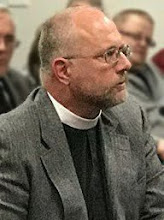
Since tomorrow is Ash Wednesday, what better time is there to talk about Lent? Let’s start by defining the word. “Lent” is Latin for “spring.” It is the time of the year when the days grow longer and warmer and tulips bloom. Lent is as unavoidable as spring itself. It just happens. So it’s not really a matter of whether you will observe it. It is rather a question of how you will observe it.
When Christians observe spring, they always remember Jesus’ resurrection. Both Scripture and history testify that Jesus was crucified and rose during the first month of spring. That’s why spring (Lent) has become a time to prepare for the annual festival of Jesus’ resurrection.
While many prepare for Easter with decorations, chocolate eggs and marshmallow bunnies, Christians have found it more helpful to prepare the heart than to decorate the home. And for help in preparing the heart, we have turned to Jesus’ Sermon on the Mount (Matthew 6:1-21). There Jesus teaches how giving, praying, and fasting can train the heart to receive what the Lord gives by His life and death and resurrection.
Know first, that Lent is not just a “once a year” observance. In fact, early on, Christians held seasons of giving, praying and fasting not only in the spring but also in summer, fall, and winter. More than that, Christians know that the mere external “doing” of these things is not at all helpful apart from the Risen Lord who makes it a permanent way of being and does not only confine it to a few weeks each year.
Most importantly, we need to be clear about the true purpose and direction of fasting, praying and giving. These are spiritual disciplines. Disciplines are teachers, not punishments. They are a way of learning from God, not being punished by Him. God forbids that we should fast with the idea that we are proving to God how self-denying we can be! We must not pray in order to demonstrate our religiosity either to God or to others. We do not give charity either because God needs it or because it feeds our self-righteousness. Rather, giving, praying and fasting are given to turn your eyes to the Risen Lord, who is Himself, your very life.
God teaches, “Man shall not live by bread alone, but by every Word that proceeds from the mouth of God.” When, in the midst of hunger and need, we turn our attention to Jesus, the Eternal Word of the Father, we learn by experience that He is the true Bread of Life (John 6:35).
Nature and reason teach that all we have is received from God. Not only does my life come to me without my having any say over it, but every kind of food comes from living plants or animals—life which I cannot generate but only cultivate in holy wonder. But while we know this in our heads, prayer brings it into the heart. Every need that you name in prayer before God is no longer taken for granted, but received as God’s gift.
While we are learning the lessons of fasting and prayer, Satan and worldly opinions conspire to turn our eyes away from the Lord who gives; and focus instead on the things that He gave. We pile up a stash for tomorrow in the desperate attempt to feel secure, but this drive for future security is not only futile but fruitless. It hampers our ability to be humane. It robs us of the joy of loving others with the material abundance that God has given. And so, God teaches us to give joyfully and charitably to those in need without fear of our own future. And in the giving, God blesses faith with the joy of life and a certain hope in His eternal giving, rather than our constantly dwindling stores.
What better teaching could there be to prepare for the festival of Jesus’ resurrection, for He is the Man who gave everything that He is and everything that He has to you. He started this giving by prayer in the garden. Thus He went to the cross joyfully, not grudgingly. He refused human comforts and lived by the Word and will of God. On the third day, He was raised again by the glory of the Father—as are all those who come to the Feast of the Resurrection by being buried with Him (Romans 6:4-5). May you thus have a blessed spring.
Tuesday, February 21, 2012


Friday, February 17, 2012
President Harrison Testifies at Hearing

As the committee followed up with questions for the panel, there were several other significant exchanges which are worth the listen.
By the way...
Notice the tattered blue book on the table in front of him? That is his Greek New Testament, falling apart from use.
Saturday, December 10, 2011
A Gift of Time
Since Adam, each and every human being ever born as been born under a death sentence. The only thing that varies from person to person is TIME. These differences in time do not reflect differences in the value of each person. The time from conception to death is always a part of the total package of God's gift of each individual to the world.
We would never have dreamed of shortening the life of Steven (Acts 7) just because we knew ahead of time that his lifespan would be only 3% of Methuselah's (Genesis 5). And yet that is exactly the counsel which many of today's parents are receiving through misguided counsellors armed with uncertain test results.
Last week, we heard the travesty of a perfectly healthy twin who was accidentally killed in an attempt to purposely kill his sibling who seemed to be destined to live a shorter life already.
While there is nothing that we can do to lengthen either our own lifespan or that of others, there is plenty that we can do to receive what time God gives for the gift that it is. Perinatal Hospice and Palliative Care is just such an opportunity to rejoice in God's gift of time. Their mission statement is:
We would never have dreamed of shortening the life of Steven (Acts 7) just because we knew ahead of time that his lifespan would be only 3% of Methuselah's (Genesis 5). And yet that is exactly the counsel which many of today's parents are receiving through misguided counsellors armed with uncertain test results.
Last week, we heard the travesty of a perfectly healthy twin who was accidentally killed in an attempt to purposely kill his sibling who seemed to be destined to live a shorter life already.
While there is nothing that we can do to lengthen either our own lifespan or that of others, there is plenty that we can do to receive what time God gives for the gift that it is. Perinatal Hospice and Palliative Care is just such an opportunity to rejoice in God's gift of time. Their mission statement is:
As prenatal testing becomes increasingly routine, more parents are learning devastating news before their babies are born. In too many places, the ability to diagnose has raced ahead of the ability to care for these families and their babies. But in a beautiful and practical response, more than 100 pioneering hospitals and hospices in the U.S. and other countries have started providing perinatal hospice/palliative care for families who wish to continue their pregnancies with babies who likely will die before or shortly after birth.
A perinatal hospice approach walks with these families on their journey through pregnancy, birth and death, honoring the baby as well as the baby's family. Perinatal hospice is not a place; it is more a frame of mind. Even in areas without a formal program, parents can create a loving experience for themselves and their baby, and health professionals and family and friends can offer support in the spirit of hospiceThere are two nearby programs that we can support in concrete and active ways.
Angel Watch, Intermountain Health Care. Contact: Carolyn Kasteler RN, (801) 698-4486. Salt Lake City, Utah
Let's give some thought to how we might help others to receive and rejoice in God's gifts.
Rainbow Kids Palliative Care Program, Primary Children's Medical Center/University of Utah. Contact: Nurse coordinator Beth Nordfors RN, (801) 662-3770. Salt Lake City, Utah
Tuesday, November 22, 2011
CrossTalk: Thanksgiving Preparations
Across our native land, Thursday will be a time for gathering with family and friends to give thanks for our many blessings. As we prepare our homes and meals for this Thanksgiving Day, here are a few thoughts to help you prepare your hearts as well.
A good place to start is with a two column list. Put good things on one side and bad things on the other. You will quickly find that such a list is harder than it seems. At first, the list of “bad” things grows quickly. But with more careful thought, many of these things can be seen as “good.”
For instance, grown-ups routinely recognize that education, healthy food, and firm behavioral boundaries are precious gifts. But children rarely see this. Remember back when you were a kid and you grumbled or whined because you didn’t like something your parents wanted to give you?
Now, consider that we are all still children in relation to God and His gracious giving. As children, we are simply without the necessary perspective to see the blessings of what God is giving us.
Some things that God gives are more obviously good: food and clothing, home and family, body and life. But even these are often experienced as “bad” — especially when we are looking at the particulars of our life. We hear it said, “Sure, food is good; but this food is awful. Sure, family is good; but not my family. Sure, life is good; but my life is a mess.”
But for those who believe that God is good, you have a ready gauge to tell you what things go in what column: All that comes from God is good! It really is that simple. And for Christians to know that God is the Man who gives His very life for you, you need only ask what comes from Him in order to know what is good and what to give thanks for.
Let your Thanksgivings follow the maturity of Jesus and leave behind the childishness of unbelief. When you do, you will see more and more of your life’s circumstances move from the negative column to the positive side. Your reasons for thankfulness will overflow while your reasons for grumbling will dwindle to nothing.
As your list becomes more and more lop-sided, your love for God grows as well. Or, better said, as your faith in God’s graciousness grows, your list will become more lop-sided. You will soon find that an hour is not enough time to thank God. Next, you will see that the whole day is far too short a time for thanksgiving. In heaven, we will find that eternity is still not enough time to finish saying thanks.
When you have finished your list — or simply been overwhelmed by the sheer wonder of it all — it’s time to move on to the next step. Recognize that God has given you all of these things through the people and things around you. He has used these people and things because He wants to receive your thanks through them.
To thank God does not stop with a mental note of His goodness. Thanksgiving expresses itself towards the people that He has used to bless you. Thank God for your family by loving your wife, your husband, your children. Thank God for your employment by working hard and being faithful. Thank God for your health by listening to your doctor and other health-care professionals. Thank God for His Word by hearing it regularly and taking it to heart.
By such things, not only will your life be filled with love and faith towards God, but you will also grow more and more to love each and every one of the good people and the good things that He has placed in your life. And they will also thank God in you. Thanks be to God.
A good place to start is with a two column list. Put good things on one side and bad things on the other. You will quickly find that such a list is harder than it seems. At first, the list of “bad” things grows quickly. But with more careful thought, many of these things can be seen as “good.”
For instance, grown-ups routinely recognize that education, healthy food, and firm behavioral boundaries are precious gifts. But children rarely see this. Remember back when you were a kid and you grumbled or whined because you didn’t like something your parents wanted to give you?
Now, consider that we are all still children in relation to God and His gracious giving. As children, we are simply without the necessary perspective to see the blessings of what God is giving us.
Some things that God gives are more obviously good: food and clothing, home and family, body and life. But even these are often experienced as “bad” — especially when we are looking at the particulars of our life. We hear it said, “Sure, food is good; but this food is awful. Sure, family is good; but not my family. Sure, life is good; but my life is a mess.”
But for those who believe that God is good, you have a ready gauge to tell you what things go in what column: All that comes from God is good! It really is that simple. And for Christians to know that God is the Man who gives His very life for you, you need only ask what comes from Him in order to know what is good and what to give thanks for.
Let your Thanksgivings follow the maturity of Jesus and leave behind the childishness of unbelief. When you do, you will see more and more of your life’s circumstances move from the negative column to the positive side. Your reasons for thankfulness will overflow while your reasons for grumbling will dwindle to nothing.
As your list becomes more and more lop-sided, your love for God grows as well. Or, better said, as your faith in God’s graciousness grows, your list will become more lop-sided. You will soon find that an hour is not enough time to thank God. Next, you will see that the whole day is far too short a time for thanksgiving. In heaven, we will find that eternity is still not enough time to finish saying thanks.
When you have finished your list — or simply been overwhelmed by the sheer wonder of it all — it’s time to move on to the next step. Recognize that God has given you all of these things through the people and things around you. He has used these people and things because He wants to receive your thanks through them.
To thank God does not stop with a mental note of His goodness. Thanksgiving expresses itself towards the people that He has used to bless you. Thank God for your family by loving your wife, your husband, your children. Thank God for your employment by working hard and being faithful. Thank God for your health by listening to your doctor and other health-care professionals. Thank God for His Word by hearing it regularly and taking it to heart.
By such things, not only will your life be filled with love and faith towards God, but you will also grow more and more to love each and every one of the good people and the good things that He has placed in your life. And they will also thank God in you. Thanks be to God.
Friday, November 18, 2011
Being Thankful for Lutheranism
The Internet Monk has been blogging in the "Post-Evangelical Wilderness" for 11 years. Now, having become a Lutheran he has posted a series of articles titled: How Lutheran Tradition Answers Many Post-Evangelical Concerns"
Life-long Lutherans often cannot know the richness of their own tradition simply because they don't have anything else to compare with it. Non-Lutherans may not know of its richness for the simple reason that it appears irrelevant to the concerns of popular Evangelicalism.
Either way, Chaplain Mike's articles are a worthwhile read for anyone interested in God the Crucified. He provides seven reasons to be thankful for the Lutheran tradition which are summed up as follows:
After these 8 points, Mike gives a bonus post called "10 Reasons to Love Luther." All five articles can be accessed by following this link.
Life-long Lutherans often cannot know the richness of their own tradition simply because they don't have anything else to compare with it. Non-Lutherans may not know of its richness for the simple reason that it appears irrelevant to the concerns of popular Evangelicalism.
Either way, Chaplain Mike's articles are a worthwhile read for anyone interested in God the Crucified. He provides seven reasons to be thankful for the Lutheran tradition which are summed up as follows:
1. The Lutheran tradition provides a solid historic tradition with roots.
2. The Lutheran tradition gives priority to Word and Table liturgical worship.
3. The Lutheran tradition places a strong emphasis on pastoral ministry.
4. The Lutheran tradition has a healthy emphasis on the vocational callings of all believers.
5. The Lutheran tradition is centered on Christ and the Gospel.
6. The Lutheran tradition keeps proper distinctions between Law and Gospel.
7. The Lutheran tradition has a sacramental theology that corrects the inefficiencies of revivalism.
8. The Lutheran tradition teaches most clearly the biblical doctrine of the Theology of the Cross.
After these 8 points, Mike gives a bonus post called "10 Reasons to Love Luther." All five articles can be accessed by following this link.
Thursday, October 6, 2011
The LCMS before the SCOTUS
Readers of this blog should be interested in a case on the docket of the Supreme Court. A congregational dispute about whether or not to rehire a parish school teacher after a leave of absence has worked it way up to the highest court of the land.
This is no longer about a local dispute. It has become about whether or not the Federal Government can impel a church to hire someone. The decision issuing from this case has the potential to overturn centuries of case law and could impair a congregation's ability to hire based on the life and doctrine of a particular teacher or preacher.
For a synopsis of the case, read this article in the Wall Street Journal.
For a transcript of the argument before the Supreme Court, read this PDF document.
Or, you may wish to follow this on the Supreme Court Blog.
This is no longer about a local dispute. It has become about whether or not the Federal Government can impel a church to hire someone. The decision issuing from this case has the potential to overturn centuries of case law and could impair a congregation's ability to hire based on the life and doctrine of a particular teacher or preacher.
For a synopsis of the case, read this article in the Wall Street Journal.
For a transcript of the argument before the Supreme Court, read this PDF document.
Or, you may wish to follow this on the Supreme Court Blog.
Tuesday, October 4, 2011
CrossTalk: Weep Not for Me, but for Yourselves, and Your Children
As I write these words today, two significant happenings fill my thoughts and prayers. Pastor Yousef Nadarkhani lost his appeal to the Iranian high court and today is condenned to death by hanging. His crime is that He knows Jesus to be the Lord and giver of life. So an innocent man stands to die for confessing the Life of the world. Also as I write, Christians around the world are participating in the third day of "40 Days for Life" <40daysforlife .com="">. Beginning last Wednesday--and through November 6--we have a special opportunity to speak up and speak out for the lives of the innocent, particularly those people who have yet to take their first breath and so cannot speak for themselves.
It goes without saying that Yousef and the innocent victims of abortion are tragic victims of senseless violence and misguided zealotry. Many before me have pointed this out. Less often noted is the way that we ourselves are injured by evils which, at first glance, only effect someone else. That is why I have taken the title of this article from Jesus' words to the women of Jerusalem as he carried the cross to his own place of execution. "And there followed a great company of people, and of women, who also bewailed and lamented him. But Jesus turning unto them said, 'Daughters of Jerusalem, weep not for me, but weep for yourselves and for your children'" (Luke 23:27-28).
Jesus, too, was an innocent man unjustly slaughtered. But he does not consider himself the most tragic figure in the story. More pitiable is the culture in which this injustice occurs. He does not say this with any glee or any sense of revenge. If you know Jesus at all, you know that he simply could not think this way. Rather, he says this because he sees more clearly than anyone else that a calloused disregard for your neighbor is truly a calloused disregard for yourself.
When God says, "love your neighbor as yourself" (Matthew 22:39), he is simply spelling out the realities of human life as he created it. Christians do not see love for another as in competition with love for self -- as though we have to take care so that we don't love our neighbor too much and neglect ourselves. Rather, for the Christian, when I love my neighbor I AM loving myself. Because in Christ, we are all one body. No body in his right mind would willingly let his finger be smashed by a hammer saying, 'that's only my finger; it's not me.' So also, the love of Christ gives us clear vision to know that concern for any person individually is care for every person corporately.
And so, my thoughts today are filled with weeping and lamentations more for the people perpetrating the crimes than for the victims. I know that Jesus holds all his children in his hands and that nothing that anybody does to them can truly destroy them. But I also know that we are quite capable of destroying ourselves by denying or ignoring our own humanity.
Therefore, as you pray for the plight of Yousef Nadarkhani and as you pray and speak during these 40 Days for Life, let your hearts most especially turn to those who are involved -- both directly and indirectly.
Pray for the doctors who have been misguided into thinking they are serving humanity by killing humans. Pray for the nurses who are often unwittingly drawn into participation in ghastly procedures. Pray for the millions of young women who have been misled or coerced into injuring their bodies and consciences in ways that they never could have foreseen. Pray for anyone who is compelled by false notions into doing what they know, deep down, is evil.
And, most of all, pray for yourselves. Pray that God might touch your heart through Christ that you might feel the same compassion for people who you have never met as you do for yourselves. For in this compassion for the unborn as the born and for all children as your own children, you will have a share in the heart of God and, therefore, a return to your own humanity as God created you. That, after all, is the kind of love that Jesus has for you. That is why he considered you so valuable as to die for you even before you ever knew him -- even before you were born.
It goes without saying that Yousef and the innocent victims of abortion are tragic victims of senseless violence and misguided zealotry. Many before me have pointed this out. Less often noted is the way that we ourselves are injured by evils which, at first glance, only effect someone else. That is why I have taken the title of this article from Jesus' words to the women of Jerusalem as he carried the cross to his own place of execution. "And there followed a great company of people, and of women, who also bewailed and lamented him. But Jesus turning unto them said, 'Daughters of Jerusalem, weep not for me, but weep for yourselves and for your children'" (Luke 23:27-28).
Jesus, too, was an innocent man unjustly slaughtered. But he does not consider himself the most tragic figure in the story. More pitiable is the culture in which this injustice occurs. He does not say this with any glee or any sense of revenge. If you know Jesus at all, you know that he simply could not think this way. Rather, he says this because he sees more clearly than anyone else that a calloused disregard for your neighbor is truly a calloused disregard for yourself.
When God says, "love your neighbor as yourself" (Matthew 22:39), he is simply spelling out the realities of human life as he created it. Christians do not see love for another as in competition with love for self -- as though we have to take care so that we don't love our neighbor too much and neglect ourselves. Rather, for the Christian, when I love my neighbor I AM loving myself. Because in Christ, we are all one body. No body in his right mind would willingly let his finger be smashed by a hammer saying, 'that's only my finger; it's not me.' So also, the love of Christ gives us clear vision to know that concern for any person individually is care for every person corporately.
And so, my thoughts today are filled with weeping and lamentations more for the people perpetrating the crimes than for the victims. I know that Jesus holds all his children in his hands and that nothing that anybody does to them can truly destroy them. But I also know that we are quite capable of destroying ourselves by denying or ignoring our own humanity.
Therefore, as you pray for the plight of Yousef Nadarkhani and as you pray and speak during these 40 Days for Life, let your hearts most especially turn to those who are involved -- both directly and indirectly.
Pray for the doctors who have been misguided into thinking they are serving humanity by killing humans. Pray for the nurses who are often unwittingly drawn into participation in ghastly procedures. Pray for the millions of young women who have been misled or coerced into injuring their bodies and consciences in ways that they never could have foreseen. Pray for anyone who is compelled by false notions into doing what they know, deep down, is evil.
And, most of all, pray for yourselves. Pray that God might touch your heart through Christ that you might feel the same compassion for people who you have never met as you do for yourselves. For in this compassion for the unborn as the born and for all children as your own children, you will have a share in the heart of God and, therefore, a return to your own humanity as God created you. That, after all, is the kind of love that Jesus has for you. That is why he considered you so valuable as to die for you even before you ever knew him -- even before you were born.
Subscribe to:
Posts (Atom)