Sunday, July 5, 2015

CrossTalk: Keep Calm and Marry On


Since last Friday (6/26/15), one topic has dominated every front page, every news site, every talk show, and many private conversations. The topic is marriage. What is it? And what happens next? What does it mean that the Supreme Court mandated a new definition of marriage for every state in the Union? What was the original definition in the first place? Let’s start there.

The marriage of a man to a woman is about children. There are a thousand different ways of loving somebody. Love can be as mild as sending a card or as powerful as dying for a friend. But only one loving activity has the potential to conceive another human being, and that is the marriage union. Once a new human being begins growing in his mother’s womb, our love obligates us to care for the child in the best way possible. That is marriage.

Mothers are always present at the birth of a child. Fathers should be as well. Marriage is the institution ordained by God to keep fathers and mothers together with their children. As long as the father and the mother remain together, there may be more children or fewer children, but all of them are blessed to have their own father and their own mother with them in the same home. Should a mother have more children with a different father, or a father have more children with a different mother, this blessing is compromised. Parents have to bounce between two or more homes, and the children feel the effects.

Since every child has the right to live with his or her own father and mother, governments that care for the rights of children have a vested interest in promoting marriage both by law and by incentives. All of these laws and incentives are aimed at encouraging the two people who conceived the child to stay together comprehensively, exclusively, and for life.

The Supreme Court did not uphold this definition of marriage. Instead, they created a new one. The new definition of marriage does not involve children. It is first and foremost about the desires of adults. Yes, laws about the raising of children will have to be updated in order to accommodate this new definition of marriage, but this is an afterthought and not the starting point.

So what does this mean? What is a Christian to do? There is much social pressure to conform your definition of marriage to the Supreme Court’s new definition. The Church has even been put on notice by the Solicitor General himself that we may face stiff fines and penalties if we don’t change our message to parrot the government’s position.

Keep calm and marry on. Marriage has not changed in the least. Your marriage is still about taking care of your children. Your parent’s marriage is still about taking care of you. Jesus Christ is still the author of such marriages and Jesus promises to help you in this beautiful and noble work.

The thunder from Washington, D.C. has not changed marriage. It has only withdrawn the government’s support of it. But this now gives us an opportunity to think about and talk about some things that we have taken for granted for a long time. So let’s talk. No matter whether you agree or disagree with the Supreme Court ruling. No matter whether you agree or disagree with your brother, or cousin, or neighbor. It is time to engage in thoughtful conversation.

Christ’s Church is with you. We will continue to speak about marriage as God instituted it at the beginning. We are here to support your marriage for your children’s sake. We are here to support your parent’s marriage for your sake. We are here to help those who have been hurt in marriage. The Church exists because we love all people. And this love impels us to so speak and act.

And how does Jesus support you? By dying and living again to forgive your sins. Jesus forgives sins. He doesn’t just wish them away or deny that they are sins. Jesus forgives sins of all kinds, also sexual sins of all kinds. True love means true forgiveness. The True Lover is the True Forgiver. His love is comprehensive, and exclusive, and unwavering.

Because Jesus is the True Bridegroom He will never give up on you. After all the blood that He shed and the pain that He endured to win you, there is no social pressure or governmental penalty that could possibly change His mind now. So keep calm and marry on.

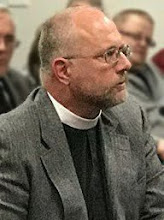
Pastor Jonathan Lange,

Tuesday, April 28, 2015

CrossTalk: Remembering Persons

“Who, after all, today speaks of the annihilation of the Armenians?” (Adolph Hitler)

I will. Will you?

I am writing these words on the 100th anniversary of the Armenian genocide. On April 24, 1915 the Ottoman Empire rounded up the community leaders in Constantinople and executed them. Thus began a reign of terror over the oldest Christian nation in the world. (Armenia had become Christian in 301 A.D. -- a full decade before Constantine came to power in the Roman Empire.)

Over the next eight years the Ottoman Turks worked to exterminate every Christian man, woman and child within their borders. After executing the Armenian leadership, their next order was to conscript all the males between the ages of 20 and 45 for military service thus removing most able-bodied men from their families. The women, children and elderly who were left were then rounded up and sent on death marches into the Syrian Desert. Most died of starvation and dehydration along the way. Those that made it to the last stop, Der Zor, found no refugee camp there. Instead, they were butchered by ax and sword. In all, approximately 1.5 million people were killed.

The world was reluctant to acknowledge these facts (and still is). This silence enabled Adolf Hitler, a mere 16 years later, to begin his own reign of terror with the words, “I have placed my death-head formations in readiness ... with orders to them to send to death mercilessly and without compassion, men, women, and children of Polish derivation and language. Only thus shall we gain the living space which we need. Who, after all, today speaks of the annihilation of the Armenians?” Hitler knew that those who cannot remember the past are doomed to repeat it. And repeat it we have.

The holocaust of the Jews was not the last genocide of the 20th century. While 6 million Jews were being killed in Germany, between 8 and 60 million more people were being killed by Soviet Communists. Then, Communist China killed uncounted millions more. Who can forget the killing fields of Cambodia, or the slaughter in North Korea which is still ongoing after 60 years? More recently Rwandan Hutus slaughtered 850,000 Tutsis between April 7 and July 8, 1994. Even now, we are seeing regular spectacles of mass beheadings and slaughters of Christians in the very same Syrian Desert where 1.5 million Armenians marched to their deaths.

Who can forget? We can, and we do. The numbers are simply too staggering. The methods are too gruesome. The justifications are too close to home. For, even though the whole world agrees that it is wrong to take the life of an innocent person, yet every one of these murders was justified by the rationale that not all human beings are persons.

Thanks be to God, that the Lord who created these human beings has not forgotten them. Nor has He consigned anyone to non-personhood. The Maker of human beings does not agree with the judgments of the world that some human life is unworthy of life. Rather, He stands in judgment against the world’s judgments. For God’s part, He seeks out and loves the weakest most vulnerable. Jesus demonstrates His strength and sovereignty not by destruction of the weakest and smallest, but by dying for the weak and the small. He does not finish off the helpless, but raises up the helpless.

For this reason He came down from heaven and was incarnate by the Holy Spirit of the Virgin Mary. He was made Man in order to rescue man. He came that you may have life and have it abundantly (John 10:10). In every place and in every heart that forgets this Truth, terror reigns. After all, once human beings can be stripped of their personhood, how could I ever be certain that my own life was worthy of life?

But Christ’s own death and Christ’s bodily resurrection is your own guarantee that you are worth dying for—not because of what you have done or not done, not because of your relative usefulness to society or even to God—but because of who you are. You are created by God in the Image of God Himself. You are one for whom Christ Jesus has given His own life.

If you are rebelling against God’s Word and God’s rule because you think it takes away your dignity, think again. If you think anyone worth less because they are rebelling against God, think again. Together let us listen to the Good Shepherd and learn to see our neighbor through the eyes of God. By this Word, you come to know the Good Shepherd Who lays down His life for the sheep (John 10:11).

Tuesday, April 7, 2015

Did the Resurrection Really Happen?

Jonathan Fisk - higherthings.org

It's kind of an important question. I mean, if the resurrection didn’t happen, what on earth are we Christians doing? It’s not like it’s gaining us any power or money or anything. But if the resurrection did happen, then why is it that so many people in the world don’t believe it?

The resurrection did happen, and I can tell you how you can be certain of it. More than that, I can do it without telling you that you have to believe it just because the Bible says so. That’s the key thing. A lot of non-Christians in our world think that Christians are just a bunch of willfully ignorant nincompoops who believe in some book that fell out of the sky. But nothing could be further from the truth. Christians are Christians because something happened in history unlike any other thing ever: A guy named Jesus was murdered, but refused to stay dead. It’s not a leap of faith. It’s an historic fact that is as easy to prove as any other bit of history, if you aren’t too close-minded to consider the evidence.

  1. Jesus was a real human. Even without the Bible, modern scholars have to admit that there was a Jewish man named Jesus who lived in the first century. Non-biblical writings like Flavius Josephus, Mara Bar-Serapion and the Jewish Talmud all mention Him as a real, historical figure.

  2. The real human Jesus died by crucifixion and was buried. In the same way, some of these extra-biblical texts mention that Jesus was killed. They don’t go into detail, but only an ignorant person who gets all their information from internet forums will try to tell you that the real Jesus didn’t die, and wasn’t even buried.

  3. This Jesus had real followers who took his death very hard. At this point, we have to start trusting the books of the Bible as eyewitness accounts. We don’t have to believe they are true. We just have to trust that they tell us what the people who wrote them actually thought. That’s what we do with every historical document about any piece of history, at least, until we find other history that tells us something different. So the guy who wrote John’s Gospel around 90 AD also claims he followed this real guy Jesus, and believed He was the Savior of the world before He was murdered, watched Him die, and then fell into despair.

  4. Jesus’ tomb was found empty three days later. Next, the followers of Jesus who despaired after His death also tell us that they stopped despairing because He appeared to them as risen. But not just to them. Extra-biblical sources from Roman historians tell us that after Jesus was killed, “a most mischievous superstition...again broke out.” Yet another document, traced to Jewish sources, tells of a gardener named Juda who stole Jesus’ body. When you put all of these pieces of history together, and combine it with the fact that Christian belief in Jesus’ resurrection all started within walking distance of His tomb, there is only one reasonable historical answer: Somehow, some way, that tomb was empty.

  5. The disciples stopped despairing and started preaching, even though it meant their own deaths. Both biblical and extra-biblical documents tell us that Christianity came from the meeting together of these followers, in order to worship their leader “Christ” and listen to his teachings. Rather than give this up, the same disciples who once fled, willingly faced gruesome and painful deaths.

  6. Antagonists convert. James, Jesus’ brother by blood, and Saul, a man who made a business of killing Christians, were among these converts. More so, Saul’s own writings claim his reason for conversion was a face-to-face meeting with the risen Jesus.

  7. This is the event upon which Christianity is founded. Christianity is not direct proof that Jesus rose, but it is proof that people who knew Jesus personally before His death believed that He rose.

  8. Christianity was founded in Jerusalem. No one in the town where all this was happening could present the dead body so as to put a stop to it. Instead, the “stolen body theory” is preached even 
by the first skeptics.

  9. They worshiped on Sunday. These new Christians, a bunch of Jews (whose religion insists they worship on Saturday) start worshiping on Sunday, because Sunday is the day when they 
believe the resurrection happened.

  10. Do the math. The challenge for the non-Christian or the skeptic (which they are usually unwilling to take up) is to find an alternative historical explanation for where this Christianity came from which also fits all of these simple, documented facts. What could make orthodox Jews change their most sacred rituals, and go to the ends of the earth to tell others about it even though it only gets them killed? They say it was because they themselves saw this man risen from the dead. On top of this, the tomb was clearly empty and the man was nowhere to be found. So, what other explanation for all the facts can you come up with?
Over the last several hundred years the skeptics have tried. There’s the hallucination theory, and the swoon theory and that good ol’ stolen body theory. But none of those theories explain all of the above facts. You can’t steal a swooned body that gets up and walks away. Separate groups of people don’t experience the same hallucination. A Jesus who needed to be taken to the hospital would hardly have convinced terrified disciples to go out and die for him.
The simple reality is that there is only one explanation of the evidence that fits all the facts. It might be unbelievable, but it is anything but unreasonable. So put it in your pocket for the next time a skeptic attacks you with his claims that you are ignorant. Ask him how he explains what Tacitus says. Ask him why the Talmud called Jesus a sorcerer. Ask him to explain all the historical facts. Then, when he won’t (since he can’t), feel free to go right on believing the truth: that the resurrection did happen. Not only is it the best explanation for all of the real historical evidence, it also happens to be what the Bible says was God’s plan for the precise purpose of saving you.

Tuesday, February 17, 2015

CrossTalk: The March of Life

On Thursday, January 22, I and a few friends walked down Constitution Avenue in our nation's capitol. It had a profound impact on me and I would like to share it with you.

The date for the walk is significant. We walked on January 22 because it was on that day in 1973 that the United States Supreme Court handed down the decision called Roe v. Wade. As a direct result of those men’s opinion, America has lost over 55 million people in the past 42 years.

The friends who joined me were about 500,000 people from every state in the union. Imagine gathering the entire population of the state of Wyoming into a few city blocks. That’s the March for Life.

We arrived about 11:30 and the crowd steadily thickened until the 1:00 start time. Speeches were coming from a huge stage, but we were too far back to hear them. When we tried to find a better place, we only succeeded in getting separated from our group. Twenty anxious minutes passed before we found them again.

There was a man pushing through the crowd and yelling out important-sounding things. But once close enough to hear, they were only curses and ugly insults hurled at us, the marchers. Saddened, we turned away. Those closer to him tried to talk calmly and reason with him. Some offered him words of comfort. Nobody tried to shout him down. Nobody reviled in return.

Once the March began it was more like a shuffle. Imagine a half-million people walking down twelve city blocks. It took us over 30 minutes just to get off the grass and onto the street. But we were moving. I was excited to get going, anticipating the destination.

There were many other groups, each one had a different pace--a different way of dressing. Some loud and singing, others were totally silent. Some individuals didn't come to march. They came to preach at the marchers. We ignored them. We had came to walk. One showed terrible and disturbing photographs. It subdued us. You could feel an intense wishing--not so much that they would stop, but that they weren’t real.

As time dragged on I became more anxious to arrive. I wanted to speed up, but there was little hope of that. Time passed slowly and progress was slower still. My phone rang and filled my thoughts with problems and challenges that I faced elsewhere. But on we marched.

In the end, it took us three full hours to walk 12 city blocks. When we finally reached our destination I looked around for a sign that we had arrived--a concluding speech, or a bell to ring, a vista for a picture--anything. But there was nothing of the sort. We milled around for a while and left for home in pairs or small knots.

This ending may sound disappointing. I admit that I was disappointed at the time. But on the plane ride home, I had a chance to reflect. The March for Life was a lot like life. We spend so much of our lives hastening on to the next thing, anxious to reach a goal. We are confronted with obstacles and annoyances along the way. Many times the people we are walking with begin to get on our nerves. We are forced to hear things and look at things that we would prefer not to. Sometimes this is facing up to the truth, but not always.

And when we get to the destination that we had anticipated for so long, there is no trumpet blast, no dazzling light. No one makes speeches and the orchestra does not play a finale. We just take it in for a moment and move on towards the next destination.

I will go back to the March for Life. My second time, though, will be different. I will be more patient for the destination to come. I will be less anxious about the time that is passing. I will be more appreciative of the people around me; and less annoyed by the myriad distractions. Because I have learned that the point of it all is in the walking. The point is in the participation; it is in the joy of loving people that you have never met and will never know. Loving people for love's sake. That’s the March for Life.

And while I am waiting for my next chance to go to Washington D. C., I will be applying all of these very same lessons to my daily walk here and now. Life is not about our destinations, or our goals. It is not about efficiency or productivity. It is about walking together; it’s about staying on the path that Jesus walked; it is about forgiving and loving and understanding and bearing with one another.

Not a bad lesson to begin with as we enter into the walk of Holy Lent.

Tuesday, July 15, 2014

CrossTalk: True Freedom

Freedom of religion means not only freedom to worship, it also means freedom to pray whenever, wherever and however you will. It means freedom to speak of your creator openly and without fear that you will be degraded in the classroom or disqualified from public service. It means freedom to operate your business according to God’s standards without the threat of fines or of being fired (as the Supreme Court recently ruled and the Congress of the United States overwhelmingly passed in the Religious Freedom Restoration Act). This is the first of the freedoms protected by the Bill of Rights. Our founders knew that it is foundational for the very existence of a free society.

When God first breathed His life into mankind, He created us to have a share in His own free existence. God, who is compelled by nothing and no-one, is utterly free. In this freedom He chose to love us by sharing His own freedom with all of humankind. This makes us human–different from the animals. For this reason the Constitution of the United States stipulates: “Congress shall make no law respecting an establishment of religion, or prohibiting the free exercise thereof.”

It was not always so. Those who wrote these words were the grateful inheritors of an idea that was introduced into the world through Christianity. Before Christ, religion was the realm of the government. Citizens were forced to worship according to the cult of the city or country in which they lived. To be Egyptian meant to worship Horace, Isis and the rest. To be Greek meant to worship the gods and godesses of the Pantheon. To be Phoenecian meant to worship Molech with child sacrifice.

The crucifixion and resurrection of Jesus of Nazareth changed all that. He broke the tyranny of Satan by His very presence in the world. As Christ’s Word spread throughout the ancient world, it turned the relationship between government and religion topsy-turvey. For the first time in the world’s existence, religion was not defined by those in power. Rather, all power and authority was defined and would be judged by the one true God – Jesus Christ. This means that every human being, no matter how powerful or how marginalized, stands equally under the same Lord and God. For people and nations who understand this, tyranny is restrained and laws intend to measure up to a standard of justice which is not merely human, but divine.

On the other hand, where this idea is lost, power reverts to a law unto itself and laws are passed to expand that power to make the power-holders into gods. That’s why it is so troubling for me to see Christianity marginalized in the name of “freedom from religion.” I am not troubled just for myself or my religious group. I am troubled because I can see far enough ahead to know that such a mindset diminishes freedom for all people. The loss of Christian foundations will inevitably lead back to the enslavement of all people. Consider what happened to freedom in the former Soviet Union or in present day North Korea where all faith is suppressed. Freedom FROM religion never freed anybody.

We are witnessing a great struggle in America today to come to terms with the relationship between freedom, power, and faith. Whether you are a Christian or not, your attitude and your understanding of these things matters. We have a Constitution and a Bill of Rights that calls for our nation to be governed by these lessons. But daily we are being reminded that unless we remain constantly watchful over our elected representatives, executors and judges, these lessons and these freedoms can and will be lost.

Christians who wish to uphold these great, human freedoms need not be shrill or frantic. You can be a strong witness to freedom merely by steadfastly exercising them in your own life. If you want to keep the freedom to worship, then don’t just talk about it! Worship freely and worship often! If you want to keep the freedom to speak God’s Word to your neighbor, then speak it today! Don’t be pressured into silence either by social stigmas or legal fears. If you want people to see the benefit of a nation “under God,” then place all your own actions and words and will under God yourself. In this way, learn for yourself the truth of Jesus’ words, “If the Son sets you free, you will be free indeed” (John 8:36). This is the freedom that changed the entire world.

Friday, May 23, 2014

Persecution in the Ball Diamond

Sam is in high school. He’s one of the good guys, a well-liked athlete who loves the outdoors, good books and being Lutheran.


He also leads the team of acolytes at his church, training the other young men and setting an example for what reverence and piety look like in the Divine Service.
He’s in church. He’s in Bible class. He is what it means to be Lutheran.
And because he is Lutheran, and because church matters to him, because he actually believes that Jesus is there for him in real time, flesh and blood on Sunday morning, he sets school and sports and friends aside to be there.
He knows everything else pales in comparison to what his Savior has to give him.
And because he is Lutheran, and because he longs to be where God has promised to be, he made a hard choice that turned out to be not so hard at all. 
+++
He told his coach during Holy Week that he wouldn’t be able to attend all the scheduled baseball practices, that he would have to leave early to make it to all the services.
And his coach, who really ought to have patted Sam on the back and told him what a wise choice he had made, instead warned him, “Sam, we all have to make decisions in life. We have to decide what our priorities are.”
That is to say, “Sam, church doesn’t matter. Baseball does.”
And yet how did our young LCMS hero respond?
“I know our decisions matter . . . and that is why I’m going to church.”
This is just the beginning of an excellent article by Adrianne Heins. Read the rest of it HERE.


Tuesday, April 29, 2014

CrossTalk: Resurrection Realities

Now that the Easter bunnies and chocolate eggs have been put away, the stores are already redecorated for the next holiday. But some of us are not so ready to move on. After all, the first Easter was not over after a single day.

It’s true that Easter Sunday was huge! Jesus appeared first to Mary Magdalene at the tomb (John 20:14-17; Mark 16:9). There, He also showed Himself to several other women (Matthew 28:9-10). Later that same day, Jesus appeared to Simon Peter (Luke 24:34). In the late afternoon, He spent some hours walking and talking with Cleopas and another disciple (Luke 24:13-32; Mark 16:12). That evening He appeared again to Peter and to the women and to Cleopas and his friend -- together with a whole roomful of disciples at once. There He talked with them, ate with them, and generally rubbed shoulders with them (Luke 24:36-49; Mark 16:14; John 20:19-23). But that doesn't end the story!

On the following day Jesus was still alive. His followers didn’t pack up the decorated eggs and start looking forward to Mothers’ Day. On the contrary, they continued to see dead men walking! It wasn’t the Zombie Apocalypse. These were saints, holy people of God, who came back to life at the earth-shattering moment of Jesus’ death. These people left the graveyard and entered into Jerusalem to walk and talk and be seen by many different people (see Matthew 27:52-53).

Nor did Jesus stop His Easter activities on the day after Easter. A week later, He appeared again to the disciples gathered in the upper room. But this time, Thomas was there, too (John 20:26-29). About a week after that, Jesus appeared to Peter, James, John, Thomas, Nathanael and to other apostles who had left Jerusalem and were fishing on the sea of Galilee (John 21:1-14). In fact, Jesus kept appearing to various and sundry people for almost six weeks after Easter until He withdrew His visibility on the day of Ascension. “He presented himself alive to them after his suffering by many proofs, appearing to them during forty days and speaking about the kingdom of God” (Acts 1:13).

Paul sums up the list of Jesus’ appearances like this, “He appeared to Peter, then to the twelve. Then he appeared to more than five hundred brothers at one time, most of whom are still alive, though some have fallen asleep. Then he appeared to James, then to all the apostles." Notice the phrase, "most of whom are still alive” (1 Corinthians 15:5-7). Paul wrote these words in 56 AD only about 25 years after Easter. So recently that most of the 500 people who saw Jesus during the 40 days after Easter were still around to tell and retell their stories, to fill in details and to answer questions. Think back to something important that happened to you in 1989 and you will have an idea how vivid and reliable their memories were.

I rehearse all these details for three reasons. First, I thought you might appreciate knowing how many eyewitnesses there were to the resurrection. Your confidence should grow knowing that they were cross-examined and checked out by so many people, for so many years. The trustworthiness of the Bible is also strengthened when you know that it was written during the life-times of thousands and thousands of people who saw and heard the events themselves. Knowing all this, you will either be strengthened in what you already believe or you will need to re-examine why you don’t believe it.

Second, the extended time of Jesus’ appearances after His resurrection, can help you understand why the Christian Church doesn’t celebrate Easter on one day only. We keep the Easter celebration going for seven full weeks! Even then, Easter is never really ever “over.”

Still, we are living in a world where Jesus is arisen. This is the third point. The resurrection is not merely ancient history. It is a present reality. The passage of time has not tarnished the brightness of the resurrection in the least. We may get distracted from thinking about it. But the energy and joy of Easter is still every bit as fresh as it was on that first Easter two millennia ago. Nothing has changed. Jesus is still risen from the dead. Satan has still been conquered. The risen body and blood of the Risen Lord is still available for you.

For this reason, your life today can and should be lived as though Christ died yesterday, arose this morning, and will come again tomorrow. Happy Easter!