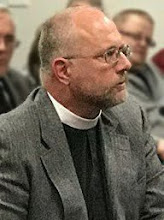
Tuesday, May 29, 2012
CrossTalk: Human Freedom
Shin Dong-Hyuk was born in prison. Not just an ordinary prison, he was born in a North Korean political prison, a labor camp, a death camp. These places are designed for one purpose: to destroy human beings. An estimated 200,000 people live there in perpetual, gnawing hunger, squalid filth and numbing cold. They do hard labor 18 hours a day, 7 days a week until they die at an astonishingly young age.
But as horrible as these conditions are for the human body, the real design is to break the human spirit. Privileges and beatings are used to condition every mind and heart to see itself as totally alone. Fellow prisoners are viewed as competition for food and as snitches when you break the rules. You are trained from birth to take and hoard for yourself and earn favors by accusing fellow inmates, to view all, even your own parents, siblings and children, as enemies. It is this attitude, more than the filthy conditions, that turns human beings into animals.
Shin’s story is told in a newly published book by Blaine Harden: "Escape from Camp 14." It is difficult to read this story, but impossible to put down. For it is a profound lesson in the meaning of freedom and the meaning of humanity. It gave special meaning to my Memorial Day weekend and the Festival of Pentecost which we marked last Sunday.
On Memorial Day, we gathered with family and friends to remember the 1,343,812 American soldiers who gave their lives in defense of the inalienable rights endowed upon all by their Creator. In the exact opposite of selfishness, these brave human beings gave their very lives to spare you from the conditions that Shin and so many others in places like Korea, Germany, Japan and Russia experienced. I hope that this memory leads you to go out of your way and thank a soldier for his selflessness and willingness to pay the ultimate price not for himself but for you.
I also hope that thoughts of selflessness lead you to see more clearly than ever that human freedom is never a freedom to live for self. Rather, it is the freedom to live for others. To be a human being is to care for others. It is for this you were created, for this you were born. When God created Adam out of the dust of the ground, he remained a mere shell of a man until God breathed into him His life-giving Spirit. It is the Holy Spirit of the God who gives what makes you unique and different from an animal.
Examine your own actions and feelings honestly and you will find plenty of examples of the kind of selfishness that takes from others and accuses others for your own gain. These attitudes and actions reveal our own great need to be freed. Even as our bodies are free to be human, our minds still linger in that captivity which makes us like animals, living apart from and against the Spirit of the Living God.
Today the Church celebrates "Pentecost Tuesday." Today we rejoice that Christ has made His Spirit available to all the world through the voice of His Church. This voice of Christ calls us back to true humanity, the selflessness of God Himself. And this voice is more than a demand. Through it, Christ actually gives the freedom that His own death has bought us. It is the freedom to live as vessels of the Holy Spirit. As Jesus says to all who hear and receive Him, "I have come that they may have life, and that they may have it more abundantly." (John 10:10).


Monday, May 28, 2012
Welfare State as Spiritual Temptation - James R. Rogers
One difference between liberal Christians and conservative Christians is how
much weight each places on the violence inherent in government action. While
authorized for “the good,” according to St. Paul in Romans 13, the magistrate
nonetheless “bears the sword.” While God-ordained, Paul paints us a realist
picture of the human basis for the magistrate’s power: It is violence or, more
usually, the threat of violence.
As Christians think about social obligations—obligations to others—I think this distinction between the means by which the church operates and the means by which the magistrate operates matters. This doesn’t mean that the government should never transfer wealth. But it does mean that the conditions under which the government transfers wealth are different than the conditions under which the church transfers wealth.
I accept the preferential option for the poor (consistent with the biblical admonition not to be “partial to a poor man in his dispute”). But I worry about the church inviting a multiplication of state-sanctioned violence against others when it is the church’s failure to live up to her mission that prompts a good part of the need for that violence. Let me explain.
The New Testament instructs Christians to use our resources to take care of our pastors and to take care of the needy. But the average Protestant donates a paltry estimated 2.5 percent of after-tax income, and Catholics less than that.
Of this 2.5 percent for Protestants, I’d guess that the largest proportion of those funds go to support services provided to the congregation itself—to the meeting of the congregations’ own needs rather than the charitable assistance of those outside it. First, there is pastoral support. St. Paul, again always the realist, notes that pastors must make their living from the Gospel. Most pastors are undercompensated relative to the important responsibilities they bear. Then there are mortgages, building upkeep, and the like. (Not that I’m opposed to beautiful church buildings.) That leaves a small residual of the 2.5 percent to go to the needy.
In such a case, how could anyone object to churches asking the state to step in and help the poor? What if the numbers of poor are so great that even a generous church could not take care of them all?
The problem is that when church officials petition the government for increased government assistance to the needy, the claim implicit in these petitions is that, because the Christian laity is, on average, so miserly, the government needs to step into to provide for the poor whom the church neglects. Rather than a lecture on social justice from church officials aimed at government officials, I’d prefer to hear a humble acknowledgement of sin and failure for the lamentable aggregate level of the church’s charitable work. We’re asking the civil government to increase its efforts because the church cannot or will not.
That said, I see few problems with church leaders going to a city council, or state legislature, or even Congress, and testifying that that the needs of the poor are so great that the government needs to do something to help. Yet it is at least an embarrassment for church leaders to petition political power—even in the name of “social justice”—when the Christian house is in such dismal shape.
While it is a shame, the move to soliciting political authority is understandable. Church leaders and concerned Christians face time and resource constraints as do the rest of us. “Rent seeking” is not limited to corporations seeking to make a profit through government largesse rather than through making a better product. For churches, it is easier and more effective to aid the poor by asking the government to coerce money out of one’s congregants (and non-Christians as well) than it is to inspire lay folk to embrace the new humanity that Jesus Christ has created in us.
But consider: Holding current church expenditures constant, increasing contributions from church members to eight percent or even ten percent of income would generate huge sums that could be devoted to the needy.
Ginning up donations, however, is the hard road. Given the imperative that the needy should be fed, how much easier it is to step around the church and the power of the Gospel, and instead to make a friend of violence. It’s all in service of a good cause, after all. With the magisterial sword, no need to change hearts and actions. We only need to threaten. What a temptation it is to call on magisterial violence to accomplish God’s work. I am not a pacifist, and therefore do not object to the sword in principle. But as with war, I think that use of the magisterial sword needs justification.
There is also the impact on the church. Once the move is made to the domain of the civil sword, it’s difficult for the church to go back. If the church has ceded responsibility for the needy to the state, then what’s the point of increasing contributions to the church? To be sure, there will always be interstices in government welfare, but filling in the cracks of the welfare state is hardly a stirring call.
There are other ventures—like international missions and other domestic ministries—to which a generous church in a welfare state could attend. But our practices shape our thinking. Once we get used to having civil authority take the lead in responsibility for an issue, then we start to think of it as the natural state of affairs. The cost for the church is that the ease with which civil authority gets results becomes a temptation, and so we look to the state’s coercion for the answers rather than to the Gospel. And that impoverishes the church, as well as society more generally.
I do not at all suggest no role for the civil authority. In noting that the magistrate carries the sword, Paul does not run away from its role in providing for “the good.” But understanding the role of the state to be filling in the interstices left by a generous church is quite different than what we have today. Even more so, because the civil authority necessarily uses violence, or its implicit threat, to implement its goals, I would suggest that there is a different threshold for state action relative to ecclesiastical action. In particular, the church needs to be concerned about her witness when she advocates coercing non-Christians to achieve her distinctively Christian vision of the good that can be reasonably obtained in this world.
FIRST THINGS
James R. Rogers is department head and associate professor of political science at Texas A&M University. He leads the “New Man” prison ministry at the Hamilton Unit in Bryan, Texas, and serves on the Board of Directors for the Texas District of the Lutheran Church-Missouri Synod.
As Christians think about social obligations—obligations to others—I think this distinction between the means by which the church operates and the means by which the magistrate operates matters. This doesn’t mean that the government should never transfer wealth. But it does mean that the conditions under which the government transfers wealth are different than the conditions under which the church transfers wealth.
I accept the preferential option for the poor (consistent with the biblical admonition not to be “partial to a poor man in his dispute”). But I worry about the church inviting a multiplication of state-sanctioned violence against others when it is the church’s failure to live up to her mission that prompts a good part of the need for that violence. Let me explain.
The New Testament instructs Christians to use our resources to take care of our pastors and to take care of the needy. But the average Protestant donates a paltry estimated 2.5 percent of after-tax income, and Catholics less than that.
Of this 2.5 percent for Protestants, I’d guess that the largest proportion of those funds go to support services provided to the congregation itself—to the meeting of the congregations’ own needs rather than the charitable assistance of those outside it. First, there is pastoral support. St. Paul, again always the realist, notes that pastors must make their living from the Gospel. Most pastors are undercompensated relative to the important responsibilities they bear. Then there are mortgages, building upkeep, and the like. (Not that I’m opposed to beautiful church buildings.) That leaves a small residual of the 2.5 percent to go to the needy.
In such a case, how could anyone object to churches asking the state to step in and help the poor? What if the numbers of poor are so great that even a generous church could not take care of them all?
The problem is that when church officials petition the government for increased government assistance to the needy, the claim implicit in these petitions is that, because the Christian laity is, on average, so miserly, the government needs to step into to provide for the poor whom the church neglects. Rather than a lecture on social justice from church officials aimed at government officials, I’d prefer to hear a humble acknowledgement of sin and failure for the lamentable aggregate level of the church’s charitable work. We’re asking the civil government to increase its efforts because the church cannot or will not.
That said, I see few problems with church leaders going to a city council, or state legislature, or even Congress, and testifying that that the needs of the poor are so great that the government needs to do something to help. Yet it is at least an embarrassment for church leaders to petition political power—even in the name of “social justice”—when the Christian house is in such dismal shape.
While it is a shame, the move to soliciting political authority is understandable. Church leaders and concerned Christians face time and resource constraints as do the rest of us. “Rent seeking” is not limited to corporations seeking to make a profit through government largesse rather than through making a better product. For churches, it is easier and more effective to aid the poor by asking the government to coerce money out of one’s congregants (and non-Christians as well) than it is to inspire lay folk to embrace the new humanity that Jesus Christ has created in us.
But consider: Holding current church expenditures constant, increasing contributions from church members to eight percent or even ten percent of income would generate huge sums that could be devoted to the needy.
Ginning up donations, however, is the hard road. Given the imperative that the needy should be fed, how much easier it is to step around the church and the power of the Gospel, and instead to make a friend of violence. It’s all in service of a good cause, after all. With the magisterial sword, no need to change hearts and actions. We only need to threaten. What a temptation it is to call on magisterial violence to accomplish God’s work. I am not a pacifist, and therefore do not object to the sword in principle. But as with war, I think that use of the magisterial sword needs justification.
There is also the impact on the church. Once the move is made to the domain of the civil sword, it’s difficult for the church to go back. If the church has ceded responsibility for the needy to the state, then what’s the point of increasing contributions to the church? To be sure, there will always be interstices in government welfare, but filling in the cracks of the welfare state is hardly a stirring call.
There are other ventures—like international missions and other domestic ministries—to which a generous church in a welfare state could attend. But our practices shape our thinking. Once we get used to having civil authority take the lead in responsibility for an issue, then we start to think of it as the natural state of affairs. The cost for the church is that the ease with which civil authority gets results becomes a temptation, and so we look to the state’s coercion for the answers rather than to the Gospel. And that impoverishes the church, as well as society more generally.
I do not at all suggest no role for the civil authority. In noting that the magistrate carries the sword, Paul does not run away from its role in providing for “the good.” But understanding the role of the state to be filling in the interstices left by a generous church is quite different than what we have today. Even more so, because the civil authority necessarily uses violence, or its implicit threat, to implement its goals, I would suggest that there is a different threshold for state action relative to ecclesiastical action. In particular, the church needs to be concerned about her witness when she advocates coercing non-Christians to achieve her distinctively Christian vision of the good that can be reasonably obtained in this world.
FIRST THINGS
James R. Rogers is department head and associate professor of political science at Texas A&M University. He leads the “New Man” prison ministry at the Hamilton Unit in Bryan, Texas, and serves on the Board of Directors for the Texas District of the Lutheran Church-Missouri Synod.
Tuesday, May 22, 2012
The Coming Struggle
“This commandment, that we should love our enemies and forgo revenge will grow even more urgent in the holy struggle which lies before us (in which we partly have already been engaged for years.) In it love and hate engage in mortal combat. It is the urgent duty of every Christian soul to prepare itself for it. The time is coming when the confession of the living God will incur not only the hatred and fury of the world, for on the whole it has come to that already, but complete ostracism from 'human society,' as they call it. The Christians will be hounded from place to place, subjected to physical assault, maltreatment and death of every kind. We are approaching and age of widespread persecution. Therein lies the true significance of all the movements and conflicts of our age. Our adversaries seek to root out the Christian Church and the Christian faith because they cannot live side by side with us, because they see in every word we utter, and every deed we do, even when they are not specifically directed against them, a condemnation of their own words and deeds. And they are not far wrong. They suspect, too, that we are indifferent to their condemnation. Indeed, they must admit that it is utterly futile to condemn us. We do not reciprocate their hatred and contention, although they would like it better if we did, and so sink to their own level.
“And how is the batter to be fought? Soon the time will come when we shall pray not as isolated individuals, but as a corporate body, a congregation, a Church: we shall pray in multitudes (albeit relatively small multitudes) and among the thousands and thousands of apostates we shall loudly praise and confess the Lord who was crucified and is risen and shall come again. And what prayer, what confession, what hymn of praise shall it be? It will be the prayer of earnest love for these very sons of perdition who stand around and gaze at us with eyes aflame with hatred, and who perhaps have already raised their hands to kill us. It will be a prayer for the peace of these erring, devastated and bewildered souls, a prayer for the same love and peace that we enjoy, a prayer which will penetrate to the depth of their souls and rend their hearts more grievously than anything they can do to us. Yes, the Church which is really waiting for its Lord, and which discerns the signs of the times of decision, must fling itself with its utmost power and with the panoply of its holy life into this prayer of love.”
A. F. C. Vilmar, 1880
Tuesday, April 10, 2012
CrossTalk: I Believe in the Resurrection of the Body
One of the curious ironies of our time, is the more information that is made available, the more misinformation is swallowed hook, line and sinker. Urban legends and Internet hoaxes abound. Email boxes are flooded with believable-sounding stories from seeming authorities which have absolutely no grounding in the truth. Nor is it only the internet to blame. Politicized scientific increasingly touts the number of scientists who believe something rather than at the number of facts that actually prove it.
In every day life, we don't think that way. If you ask me if the sky is blue, I wouldn't consult the experts or look in a book. I would just look up and see. You don't believe the sky is blue because others say it is. You believe it because it is.
This is what Christians also mean when we speak of faith. God never expects that you will believe things to be true on the basis of human authorities -- parents, church leaders, scientists, philosophers, or books. Rather, He calls forth faith simply in what is. This is the kind of faith that God calls forth in the resurrection of Jesus Christ. Don't believe it or disbelieve it based on what others say. Investigate for yourself. Learn the facts for yourself.
At first you may shrug your shoulders and say: how could I possibly know something that happened nearly 2000 years ago! But you don't think this way about the Roman Empire, the Greeks or even the ancient Egyptians. And Jesus' resurrection is by far the most talked about and documented fact in the history of the world.
Look at the reports and you will see not only the claim that it happened. You will also see dates and places. You can go and visit these places today. You can study history and verify that Herod and Pilate and Jesus were all in Jerusalem in 30 A.D.
Read about Jesus' appearances after He rose from the dead and you will find that he did not appear as a mere apparition or hallucination. Rather, He appeared in a variety of places doing a variety of different things. Jesus eats (Luke 24:41-43). Jesus walks (Luke 24:15). Jesus cooks (John 21:9-10). Jesus speaks (John 20:15). He even allows people to poke around in His wounds (John 20:27).
And how do we know about all these appearances? Not merely from a one-time flash appearance. Nor from a small and secretive cabal of true believers. Rather, from a huge group of eyewitnesses through the course of over six weeks and across scores of miles of territory (1 Corinthians 15:5-8). Most of these eyewitnesses lived long lives and were questioned and cross examined many, many times over decades. Their stories were checked out. They were compared with the stories of others for inconsistencies. Many of them were tested by fire, wild beasts and torture to see how sincere they were. They sat in the pew with fellow believers for decades after the resurrection of Jesus and their stories were written down so that you could know all this.
Look into these facts yourself. A good place to start is: <http://www.whitehorseinn.org/blog/2011/04/23/risen-indeed-3/>. But wherever you start, you will wind up with the same facts. The next step is to ask what it means and how it changes your life.
For answering these questions, the risen Jesus has given the one, holy Christian Church. There you will learn how the event of the resurrection is the center of all history. But most of all, you will learn that it was especially for you. Christ is risen. He is risen, indeed!
In every day life, we don't think that way. If you ask me if the sky is blue, I wouldn't consult the experts or look in a book. I would just look up and see. You don't believe the sky is blue because others say it is. You believe it because it is.
This is what Christians also mean when we speak of faith. God never expects that you will believe things to be true on the basis of human authorities -- parents, church leaders, scientists, philosophers, or books. Rather, He calls forth faith simply in what is. This is the kind of faith that God calls forth in the resurrection of Jesus Christ. Don't believe it or disbelieve it based on what others say. Investigate for yourself. Learn the facts for yourself.
At first you may shrug your shoulders and say: how could I possibly know something that happened nearly 2000 years ago! But you don't think this way about the Roman Empire, the Greeks or even the ancient Egyptians. And Jesus' resurrection is by far the most talked about and documented fact in the history of the world.
Look at the reports and you will see not only the claim that it happened. You will also see dates and places. You can go and visit these places today. You can study history and verify that Herod and Pilate and Jesus were all in Jerusalem in 30 A.D.
Read about Jesus' appearances after He rose from the dead and you will find that he did not appear as a mere apparition or hallucination. Rather, He appeared in a variety of places doing a variety of different things. Jesus eats (Luke 24:41-43). Jesus walks (Luke 24:15). Jesus cooks (John 21:9-10). Jesus speaks (John 20:15). He even allows people to poke around in His wounds (John 20:27).
And how do we know about all these appearances? Not merely from a one-time flash appearance. Nor from a small and secretive cabal of true believers. Rather, from a huge group of eyewitnesses through the course of over six weeks and across scores of miles of territory (1 Corinthians 15:5-8). Most of these eyewitnesses lived long lives and were questioned and cross examined many, many times over decades. Their stories were checked out. They were compared with the stories of others for inconsistencies. Many of them were tested by fire, wild beasts and torture to see how sincere they were. They sat in the pew with fellow believers for decades after the resurrection of Jesus and their stories were written down so that you could know all this.
Look into these facts yourself. A good place to start is: <http://www.whitehorseinn.org/blog/2011/04/23/risen-indeed-3/>. But wherever you start, you will wind up with the same facts. The next step is to ask what it means and how it changes your life.
For answering these questions, the risen Jesus has given the one, holy Christian Church. There you will learn how the event of the resurrection is the center of all history. But most of all, you will learn that it was especially for you. Christ is risen. He is risen, indeed!
Friday, April 6, 2012
The spread of fatal, self-centered thinking in the West
How come after 56 million legal abortions since Roe v. Wade in 1973, even conservative pundits reproach Santorum for giving priority to “social issues”? For starters, this term is a diabolical misnomer for mass killing. A social issue might be whether you wear a tuxedo or tails at a glamorous ball; whether you, a commoner, should court a princess or, on a different level, whether workers should be given three or four weeks vacations per year. There’s nothing “social” about depriving an unborn baby of his or her chance to ever be social in the sense of interacting with other human beings. The genocides perpetrated against millions of kulaks in the Soviet Union, Jews in Germany, Cambodians in Cambodia and Tutsis in Africa were not “social issues”; so by what right should the annual annihilation of more than one million fetuses be euphemistically reduced to a bagatelle in such a hypocritical manner?
Uwe Simon-Netto is a Lutheran columnist from Germany.
The rest of his article may be read here.
Tuesday, February 21, 2012
CrossTalk: Observing Lent
Since tomorrow is Ash Wednesday, what better time is there to talk about Lent? Let’s start by defining the word. “Lent” is Latin for “spring.” It is the time of the year when the days grow longer and warmer and tulips bloom. Lent is as unavoidable as spring itself. It just happens. So it’s not really a matter of whether you will observe it. It is rather a question of how you will observe it.
When Christians observe spring, they always remember Jesus’ resurrection. Both Scripture and history testify that Jesus was crucified and rose during the first month of spring. That’s why spring (Lent) has become a time to prepare for the annual festival of Jesus’ resurrection.
While many prepare for Easter with decorations, chocolate eggs and marshmallow bunnies, Christians have found it more helpful to prepare the heart than to decorate the home. And for help in preparing the heart, we have turned to Jesus’ Sermon on the Mount (Matthew 6:1-21). There Jesus teaches how giving, praying, and fasting can train the heart to receive what the Lord gives by His life and death and resurrection.
Know first, that Lent is not just a “once a year” observance. In fact, early on, Christians held seasons of giving, praying and fasting not only in the spring but also in summer, fall, and winter. More than that, Christians know that the mere external “doing” of these things is not at all helpful apart from the Risen Lord who makes it a permanent way of being and does not only confine it to a few weeks each year.
Most importantly, we need to be clear about the true purpose and direction of fasting, praying and giving. These are spiritual disciplines. Disciplines are teachers, not punishments. They are a way of learning from God, not being punished by Him. God forbids that we should fast with the idea that we are proving to God how self-denying we can be! We must not pray in order to demonstrate our religiosity either to God or to others. We do not give charity either because God needs it or because it feeds our self-righteousness. Rather, giving, praying and fasting are given to turn your eyes to the Risen Lord, who is Himself, your very life.
God teaches, “Man shall not live by bread alone, but by every Word that proceeds from the mouth of God.” When, in the midst of hunger and need, we turn our attention to Jesus, the Eternal Word of the Father, we learn by experience that He is the true Bread of Life (John 6:35).
Nature and reason teach that all we have is received from God. Not only does my life come to me without my having any say over it, but every kind of food comes from living plants or animals—life which I cannot generate but only cultivate in holy wonder. But while we know this in our heads, prayer brings it into the heart. Every need that you name in prayer before God is no longer taken for granted, but received as God’s gift.
While we are learning the lessons of fasting and prayer, Satan and worldly opinions conspire to turn our eyes away from the Lord who gives; and focus instead on the things that He gave. We pile up a stash for tomorrow in the desperate attempt to feel secure, but this drive for future security is not only futile but fruitless. It hampers our ability to be humane. It robs us of the joy of loving others with the material abundance that God has given. And so, God teaches us to give joyfully and charitably to those in need without fear of our own future. And in the giving, God blesses faith with the joy of life and a certain hope in His eternal giving, rather than our constantly dwindling stores.
What better teaching could there be to prepare for the festival of Jesus’ resurrection, for He is the Man who gave everything that He is and everything that He has to you. He started this giving by prayer in the garden. Thus He went to the cross joyfully, not grudgingly. He refused human comforts and lived by the Word and will of God. On the third day, He was raised again by the glory of the Father—as are all those who come to the Feast of the Resurrection by being buried with Him (Romans 6:4-5). May you thus have a blessed spring.
When Christians observe spring, they always remember Jesus’ resurrection. Both Scripture and history testify that Jesus was crucified and rose during the first month of spring. That’s why spring (Lent) has become a time to prepare for the annual festival of Jesus’ resurrection.
While many prepare for Easter with decorations, chocolate eggs and marshmallow bunnies, Christians have found it more helpful to prepare the heart than to decorate the home. And for help in preparing the heart, we have turned to Jesus’ Sermon on the Mount (Matthew 6:1-21). There Jesus teaches how giving, praying, and fasting can train the heart to receive what the Lord gives by His life and death and resurrection.
Know first, that Lent is not just a “once a year” observance. In fact, early on, Christians held seasons of giving, praying and fasting not only in the spring but also in summer, fall, and winter. More than that, Christians know that the mere external “doing” of these things is not at all helpful apart from the Risen Lord who makes it a permanent way of being and does not only confine it to a few weeks each year.
Most importantly, we need to be clear about the true purpose and direction of fasting, praying and giving. These are spiritual disciplines. Disciplines are teachers, not punishments. They are a way of learning from God, not being punished by Him. God forbids that we should fast with the idea that we are proving to God how self-denying we can be! We must not pray in order to demonstrate our religiosity either to God or to others. We do not give charity either because God needs it or because it feeds our self-righteousness. Rather, giving, praying and fasting are given to turn your eyes to the Risen Lord, who is Himself, your very life.
God teaches, “Man shall not live by bread alone, but by every Word that proceeds from the mouth of God.” When, in the midst of hunger and need, we turn our attention to Jesus, the Eternal Word of the Father, we learn by experience that He is the true Bread of Life (John 6:35).
Nature and reason teach that all we have is received from God. Not only does my life come to me without my having any say over it, but every kind of food comes from living plants or animals—life which I cannot generate but only cultivate in holy wonder. But while we know this in our heads, prayer brings it into the heart. Every need that you name in prayer before God is no longer taken for granted, but received as God’s gift.
While we are learning the lessons of fasting and prayer, Satan and worldly opinions conspire to turn our eyes away from the Lord who gives; and focus instead on the things that He gave. We pile up a stash for tomorrow in the desperate attempt to feel secure, but this drive for future security is not only futile but fruitless. It hampers our ability to be humane. It robs us of the joy of loving others with the material abundance that God has given. And so, God teaches us to give joyfully and charitably to those in need without fear of our own future. And in the giving, God blesses faith with the joy of life and a certain hope in His eternal giving, rather than our constantly dwindling stores.
What better teaching could there be to prepare for the festival of Jesus’ resurrection, for He is the Man who gave everything that He is and everything that He has to you. He started this giving by prayer in the garden. Thus He went to the cross joyfully, not grudgingly. He refused human comforts and lived by the Word and will of God. On the third day, He was raised again by the glory of the Father—as are all those who come to the Feast of the Resurrection by being buried with Him (Romans 6:4-5). May you thus have a blessed spring.
Friday, February 17, 2012
President Harrison Testifies at Hearing

As the committee followed up with questions for the panel, there were several other significant exchanges which are worth the listen.
By the way...
Notice the tattered blue book on the table in front of him? That is his Greek New Testament, falling apart from use.
Subscribe to:
Posts (Atom)